


College Baseball, MLB Draft, Prospects – Baseball America
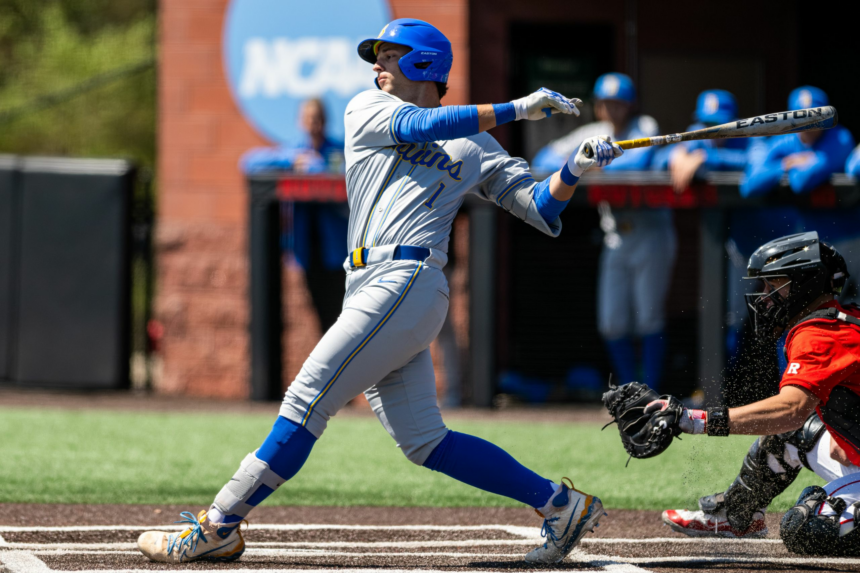
Image credit: Roch Cholowsky (Photo by Dan Squicciarini/NurPhoto via Getty Images)
Earlier this week, we took a shot at ranking each of the 64 teams in the 2026 NCAA Tournament. Today, we’ll get more player-specific with another ranking that looks at the top draft prospects in this year’s field regardless of class.
Each year, the NCAA tournament is filled with talented players. Some are current-year draft prospects and some are underclassmen who scouts will bear down on in the coming years. By the time a national champion is crowned, a number of these draft names will have inevitably boosted their stock in their respective classes.
Because this is a class-agnostic attempt at lining up the top 25 draft prospects in the field, it should help you keep an eye on the most important players to watch, whether you’re a bona fide draftnik or a diehard college fan trying to keep tabs on players to lock in on.
For even more information on the players below, be sure to check out our respective draft rankings for each class:
Cholowsky is the top-ranked player in his class, won a Player of the Year award a year ago, was just named a finalist for the award after another standout 2026 season and is also one of the most talented defensive shortstops in the country. He’s a household name for a reason and has the ability to impact the game in all facets.
Lackey is the latest backstop to come out of “Catcher U” and he also has the athleticism and defensive versatility to play every position on the diamond. He won’t do that in the tournament because he happens to also be an elite defensive catcher, and he vaulted up draft boards this spring by adding significantly more power to what was already an impressive foundation of contact skills.
Flora is the consensus top pitching prospect in the class, a finalist for our 2026 Pitcher of the Year award and leads qualified arms with a minuscule 1.05 ERA. A 6-foot-5, 205-pound righthander who has solid control and added more depth to his pitch mix this spring, he pairs a new breaking ball shape and a plus kick-changeup with what was already a swing-and-miss fastball/slider combo.
Kelly is a barrel machine who recently moved into the No. 1 spot in our 2027 college rankings on the back of a .379/.480/.680 slash line with 13 home runs and more walks than strikeouts. He’s an impressive athlete who gets most of his time behind the plate, but when he’s not catching, he’s also an adept middle infielder who forms a double-play tandem with fellow 2027 prospect Matt Ineiech at shortstop.
Lawson has one of the most dangerous bats in the country, and is coming off a sophomore season in which he hit .308/.516/.680 with 16 home runs. Among players who had at least an 80% contact rate this spring, Lawson’s 111.2 mph 90th percentile exit velocity was good for the best in the country. He’s been entrenched in the No. 2 hole all season for Florida, and even when he’s not hitting, he has strong on-base skills.
Hairston had a historic sophomore campaign with Arizona State this season and is one of just a handful of qualified Power Four conference hitters to manage a 1.400 OPS or better in the last six seasons. The lefthanded-hitting left fielder slashed .413/.518/.897 with more home runs (28) than strikeouts (24). He’s a hitter no team will want to face this postseason, but if that happens, he should be aggressively matched up with bullpen lefties whenever possible.
Valincius is the top arm on a Mississippi State team that is loaded with impact pitchers. He’s a physical lefthander who attacks hitters with a fastball/slider combination and plenty of strikes. The fastball sits in the mid 90s and comes with plenty of armside running life, and he also locates a power slider in the upper 80s that is a consistent swing-and-miss weapon vs. both lefties and righties. He was one of just nine pitchers in the regular season with at least 50 innings, a strikeout rate better than 30% and a walk rate below 6%.
Levonas is a strikeout artist whose 39.4% strikeout rate was fourth-best in the country, behind only Mason Edwards (45.1%), Dax Whitney (41.8%) and Zach Peters (40.9%) among qualified pitchers. He has a powerful arsenal led by a mid-90s fastball that has been up to 101 mph, as well as multiple high-spin breaking balls, including a mid-80s slider and low-80s curveball.
Hacopian is a natural hitter with three years of standout offensive production and a hit/power combination that’s difficult to beat. He has a career strikeout rate under 10%, only eclipsed that double-digit mark for the first time in 2026 after moving from Maryland to Texas A&M and has always walked more than he’s struck out. Lately, he has gotten into the Texas A&M lineup as the team’s DH, but he could play all over the infield even though his primary value comes from the batter’s box.
Helfrick has game-changing raw power, and after homering 15 times as a sophomore in 2025, he hit 16 home runs this year in 2026. That power comes with swing-and-miss tendencies—he has a 21.5% career strikeout rate—and teams facing him will undoubtedly attack him with plenty of secondaries. Even if he’s not hitting, Helfrick impacts this Arkansas team by bringing strong defensive work behind the plate and a plus throwing arm.
Flukey missed most of the 2026 season with a rib strain, but just a year ago, he pitched Coastal Carolina to the College World Series. He has big-game experience and big-game stuff—including a riding fastball up to 98 mph, a downer curveball and a hard slider—but is still trying to get back to peak form. Flukey’s pitch count and innings load has steadily progressed since his return to the mound on April 26, but he has been a bit more hittable this season than he was a year ago when he posted a 3.28 ERA over 101.2 innings.
Few college hitters have been as productive as Burress in the last three seasons. According to FanGraphs’ weighted runs above replacement, Burress has been the single-most productive college hitter in that span. He’s a career .360/.486/.722 hitter with 58 home runs, which is the most in Georgia Tech’s program history. He’s a pull-oriented power hitter who also plays a solid center field.
Bell is a well-rounded shortstop and switch hitter with a patient approach. He missed time early in the season with a shoulder injury, but since returning to the lineup in early March, he has been a high-on-base hitter at the top of Kentucky’s lineup. Bell will make pitchers work and rarely expands the zone. He’s rocking a career-best 16.7% walk rate and also looks the part as a shortstop defender in the field.
Reese is one of the most fearsome lefthanded hitters in the country. He does have swing-and-miss tendencies that were exposed a bit in conference play and can be induced to expand the zone, but if he connects, he can rocket balls out of the park to the pull side as quickly as anyone. At 6-foot-4, 220 pounds, Reese has tremendous strength and bat speed. And while he’s a bat-first player, he is a fine college defender at third base on routine plays.
Gracia is a well-rounded and steady lefthanded hitter who just had his third straight season with at least a 1.000 OPS season in his first year with Virginia. He understands the zone at an advanced level, has never walked less than 17.3% of the time and makes a tremendous amount of contact in the zone for a hitter who has also hit between 14 and 15 home runs each season. His offensive production is excellent for his center field profile, but he isn’t the fastest defender, and runners might be able to get aggressive taking an extra bag against him.
Robbins spent two seasons with Seton Hall before transferring to Texas in 2026, where he took over the center field job and was second on the team with a 1.111 OPS and hit 19 home runs with 11 steals. There are some underlying swing-and-miss tendencies that could get exposed, but he was just as impressive in conference play as he was overall and has solid athleticism in the outfield.
Partida, our No. 1 college draft prospect for 2028, is coming off one of the most impressive freshman seasons in the country after hitting .317/.428/.585 with 12 home runs as the starting third baseman for Texas A&M. He missed most of May with a hamstring injury but is expected to be back in the lineup as the Aggies host Southern California, Texas State and Lamar in the College Station regional. He’s a well-rounded hitter and sure defender with a plus arm.
Fralick became Auburn’s starting catcher as a freshman in 2025, flashing some power before taking a big step forward as a hitter in his 2026 sophomore season. He hit .311/.415/.594 with 14 home runs and 16 doubles to go with a well-rounded offensive profile that includes solid contact skills, power and swing decisions.
Mack pitched a season with Rutgers in 2025, then transferred to Tennessee, where he made a significant jump in fastball velocity. He now sits around 96 mph with his fastball and touches 100 while mixing in an assortment of secondaries including a mid-80s cutter and slider, an upper-70s curveball and a hard changeup in the upper 80s.
Cozart, named a finalist for BA’s Freshman of the Year award, has a big league frame at 6-foot-6, 260 pounds, big-league velocity with a fastball up to 97 mph and big-league strikes with a 7.1% walk rate in 45.1 innings in his first year with Texas. He has a starter profile, but has pitched as a lights-out reliever for Texas this season, posting a 1.59 ERA with a 39.3% strikeout rate.
Appenzeller is a lean, low-slot lefthander with a starter’s delivery and pitch mix who has thrown primarily out of the bullpen for Tennessee in 2026 as a freshman. He posted a 4.89 ERA over 53.1 innings, with a 27.3% strikeout rate and 6.9% walk rate. While his stuff isn’t overwhelming yet, Appenzeller has impressive feel for his entire pitch mix, which includes a 90-94 mph fastball, a slurvy upper-70s breaking ball and a mid-80s changeup.
Lebron is the biggest wildcard on this list of players. His physical tools and natural athleticism rivals anyone, but his pure hitting ability is questionable, and he’s coming off the worst individual season of his college career. Lebron is an aggressive hitter who can be coaxed out of the zone and will struggle to connect with secondaries, but he has a game-changing power/speed combination (14 home runs and 38 steals) and team-carrying ability if he gets on a hot streak.
Peterson is an effectively wild righthander with some of the best pure stuff in the country, but erratic strike-throwing that brings big volatility from start to start and inning to inning. He sits around 96 mph and touches 101 with his fastball, and his upper-80s slider looks unhittable for college players most of the time, as he generated a 53% miss rate with the pitch this spring. When he’s throwing his arsenal, which also includes a curveball and changeup, over the plate, he can shut down any lineup in the country. When he’s not… things can snowball in a bad way quickly.
Kuhns is a lean and wiry athlete who had an up-and-down 2026 season, but he has been dominant in four of his last five outings. He throws a mid-90s fastball from a low release height as his primary pitch and has recently favored an upper-70s high-spin curveball as his go-to secondary. Kuhns will also break out a harder mid-80s slider and a mid-80s changeup, and he generally throws his entire mix for solid strikes.
Parker is the twin brother of Blue Jays 2025 first-round pick JoJo Parker. While JoJo has been playing with Low-A Dunedin, Jacob forced his way into Mississippi State’s starting lineup in mid March and has slowly been pushed up the lineup after pulverizing baseballs repeatedly. He hit .315/.412/.651 with 13 home runs in 46 games and offsets his 22% strikeout rate with a solid 13% walk rate. Parker has great strength and a leveraged, uphill bat path that gets plenty of balls in the air to the pull side, with a strong throwing arm in right field.
J.J. Cooper uses team data points to illustrate how all 64 of this year’s NCAA Tournament teams stack up in key metrics.
UC Santa Barbara is nothing short of a mid-major pitching factory and should get its latest first-round pick this year in Jackson Flora.
On this week’s Prospect Podcast, we’re scouring the minor leagues to pick out the best of the best when it comes to position groups.
Ian Cundall recently watched a pair of 2025 College World Series standouts pitch for their current MLB clubs. Here’s what he saw.
Presenting five finalists for Baseball America’s 2026 College Pitcher of the Year award.
On this week’s Hot Sheet Show, we get ready for the start of the 2026 NCAA Tournament with a look at the bracket, top players & more.
In this week’s Future Projection mailbag, Ben and Carlos field listener questions about some top up-and-coming hitters from Latin America.
In this week’s College Baseball Podcast, we discuss everything to know heading into the start of the 2026 NCAA Tournament this week.
On this week’s Draft Podcast, Carlos and J.J. break down everything to know from BA’s latest MLB mock draft.
In this week’s Future Projection, Ben and Carlos discuss prospects outside the Top 100 who are trending up in org ranks so far in 2026.
Gavin Cecchini joins the From Phenom To The Farm Podcast to talk about his life in baseball and path to the big leagues.
Read the newest magazine issue right on your phone
Join our social media community
230K
258K
345K
35K
22k
Categories
Competition Levels
Subscribe
About
Follow us on:
Ranking The Top 25 MLB Draft Prospects In The 2026 NCAA Tournament – Baseball America


Leave a Comment