


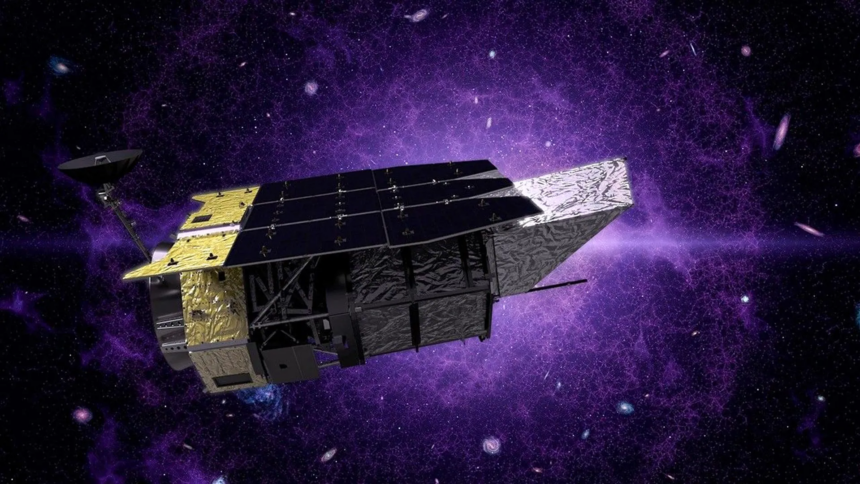
NASA’s Nancy Grace Roman Space Telescope could head into space sooner than expected, with NASA now targeting a launch as early as September 2026. The updated timeline moves the mission ahead of the agency’s previous commitment to launch no later than May 2027.
"Roman’s accelerated development is a true success story of what we can achieve when public investment, institutional expertise, and private enterprise come together to take on the near-impossible missions that change the world," said NASA Administrator Jared Isaacman during a news conference at NASA’s Goddard Space Flight Center in Greenbelt, Maryland.
Roman Space Telescope To Explore Deep Space
The Roman Space Telescope is designed to combine a massive field of view with powerful infrared imaging capabilities, allowing scientists to study huge sections of the universe in remarkable detail. Although the mission’s main scientific goals focus on dark energy, dark matter, and planets beyond our solar system, researchers expect the observatory to support a wide range of astronomical discoveries.
By the end of its planned five year primary mission, Roman is expected to collect an enormous archive containing roughly 20,000 terabytes of data. Scientists will use this information to investigate around 100,000 exoplanets, hundreds of millions of galaxies, billions of stars, and unusual cosmic events that may include objects or phenomena never previously observed.
SpaceX Falcon Heavy Launch Plans
NASA plans to launch the observatory aboard a SpaceX Falcon Heavy rocket from Launch Complex 39A at Kennedy Space Center in Florida. Additional details about the exact launch date will be announced later as mission preparations continue.
The Nancy Grace Roman Space Telescope mission is managed by NASA’s Goddard Space Flight Center. The project also includes contributions from NASA’s Jet Propulsion Laboratory, Caltech/IPAC in Southern California, the Space Telescope Science Institute (STScI) in Baltimore, and scientists from multiple research institutions.
Story Source:
Materials provided by NASA. Note: Content may be edited for style and length.
Cite This Page:
Scientists Discover Bizarre 100-Million-Year-Old Insect With Giant Claws
New Study Challenges What We Know About Consciousness and the Brain
Scientists Discover “Good” Gut Microbes That Could Protect Against Autism and ADHD
Scientists Reveal That Eating Almonds Every Day Could Transform Your Gut, Metabolism, and Appetite
Stay informed with ScienceDaily’s free email newsletter, updated daily and weekly. Or view our many newsfeeds in your RSS reader:
Keep up to date with the latest news from ScienceDaily via social networks:
Tell us what you think of ScienceDaily — we welcome both positive and negative comments. Have any problems using the site? Questions?
NASA’s powerful Roman Space Telescope is about to transform astronomy – ScienceDaily



Leave a Comment