A Journal of Analysis and News
By Dr. Mohamed Chtatou
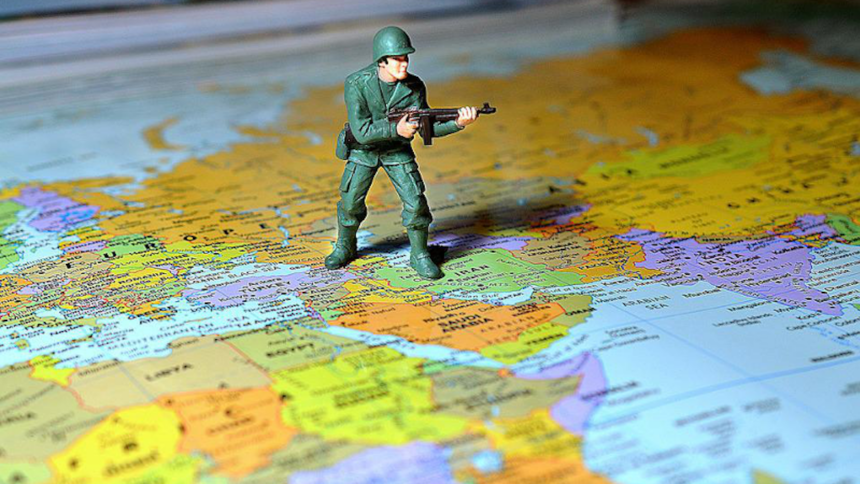
The Middle East remains one of the most volatile regions in contemporary international relations, defined by overlapping crises rooted in colonial legacies, religious sectarianism, resource competition, and great-power competition. This essay examines the structural and proximate causes of chronic instability in the region, focusing on the Iran–United States confrontation, the unresolved Palestinian question, the Israel–Arab dynamic, Saudi–Iranian rivalry, the role of proxy warfare, and the strategic significance of the Strait of Hormuz (Chtatou, 2026, April 16). Drawing on political realism, constructivism, and theories of regional security complexes, the essay argues that the Middle East is caught in a self-reinforcing cycle of deterrence failure, proxy escalation, and diplomatic paralysis. External intervention by the United States, Russia, and China compounds internal fragility, while ideological antagonisms—rooted in competing visions of political Islam, nationalism, and Zionism—render negotiated settlements extraordinarily difficult. The essay concludes that without sustained multilateral engagement addressing both security dilemmas and socioeconomic grievances, the region will remain a persistent threat to global stability (Chtatou, 2026, May 10).
The Middle East has occupied a central and turbulent place in global affairs for more than a century. Few regions of comparable size have generated such a persistent concentration of wars, civil conflicts, revolutions, and diplomatic crises. From the Sykes–Picot Agreement of 1916, which imposed artificial borders on the Arab world following the collapse of the Ottoman Empire, to the ongoing war in Gaza, the region has been shaped by forces that resist easy resolution (Fromkin, 1989). Scholars of international relations have long debated whether this instability is primarily a product of internal social and political contradictions, or whether it is better explained by the predatory logic of great-power competition (Halliday, 2005). The answer, this essay contends, is emphatically both.
The concept of a ‘regional security complex’ (RSC), developed by Buzan and Wæver (2003), offers a particularly useful analytical lens. An RSC is defined as a set of states whose security concerns are so interlinked that they cannot be meaningfully analysed in isolation from one another. The Middle East exemplifies this dynamic: a conflict in Lebanon invariably reverberates in Israel; a change of regime in Baghdad reshapes the balance of power between Tehran and Riyadh; a blockade of the Strait of Hormuz would send shockwaves through the global economy within hours. The region’s security architecture is not merely complicated—it is deeply, structurally entangled (Chtatou, 2026, April 16).
This essay proceeds in six substantive sections. It begins with a historical overview of the colonial foundations of regional instability, before examining the Iran–United States confrontation, the Palestinian question, Israel’s strategic posture, the Saudi–Iranian cold war, and the threat of conflict escalation through proxy networks and strategic chokepoints (Chtatou, 2026, May 10). The essay concludes with a reflection on the prospects for diplomatic de-escalation and the conditions under which durable stability might become possible.
Any serious analysis of Middle Eastern instability must begin with the colonial era, for the region’s present disorders are in significant measure a product of decisions made in European capitals over a century ago. The Sykes–Picot Agreement, negotiated in secret between Britain and France in 1916, carved up the Arab provinces of the dying Ottoman Empire into spheres of influence without meaningful reference to the ethnic, tribal, or religious communities that inhabited the land (Barr, 2011). The result was a set of states whose borders frequently cut across, rather than followed, the boundaries of social identity. Iraq was assembled from three Ottoman provinces—Mosul, Baghdad, and Basra—with a Sunni Arab minority governing a Shia Arab majority and a large Kurdish population in the north, a formula for chronic sectarian conflict (Tripp, 2007).
The Balfour Declaration of 1917, in which Britain expressed support for ‘the establishment in Palestine of a national home for the Jewish people’ while simultaneously promising to protect ‘the civil and religious rights of existing non-Jewish communities,’ contained a fundamental contradiction that has never been resolved (Schneer, 2010, p. 341). The subsequent British Mandate over Palestine, followed by the 1947 United Nations Partition Plan and the establishment of the State of Israel in 1948, triggered the first Arab–Israeli War and the displacement of approximately 700,000 Palestinians—an event known in Arabic as the Nakba, or catastrophe (Morris, 2008). The Palestinian refugee question, now encompassing millions of people across multiple generations, remains one of the most intractable problems in world politics.
The post-colonial states that emerged across the Arab world were, with few exceptions, authoritarian structures lacking legitimacy rooted in popular consent. Nasserism, Baathism, and various forms of Islamic revivalism each arose partly as responses to the perceived failure of the colonial and post-colonial order (Owen, 2004). The 1979 Islamic Revolution in Iran injected an explicitly theocratic and anti-Western ideology into the regional order, fundamentally reshaping the strategic landscape and inaugurating a rivalry with Saudi Arabia—the leading Sunni power—that has defined the regional balance of power ever since (Axworthy, 2013). These historical sedimentations form the substrate upon which all contemporary conflicts are built.
The relationship between Iran and the United States is one of the most consequential and dangerous bilateral relationships in the contemporary international system. Rooted in the 1953 CIA-supported coup that ousted Prime Minister Mohammad Mosaddegh and reinstated the Shah, the hostility between Tehran and Washington has been structural, ideological, and deeply personalised (Kinzer, 2003). The 1979 hostage crisis, in which Iranian students held 52 American diplomats for 444 days, cemented a mutual animus that subsequent decades have intensified rather than moderated.
The nuclear question has been the defining issue of the relationship since at least the mid-2000s. Iran’s pursuit of uranium enrichment, ostensibly for civilian purposes, alarmed both the United States and Israel, who feared that Tehran was seeking a threshold nuclear weapons capability (Cirincione, 2007). The Joint Comprehensive Plan of Action (JCPOA), concluded in 2015 under the Obama administration, placed significant constraints on Iran’s nuclear programme in exchange for sanctions relief, representing one of the few successful episodes of multilateral diplomacy with Tehran (Parsi, 2017). However, the Trump administration’s unilateral withdrawal from the JCPOA in May 2018 and the reimposition of maximum-pressure sanctions triggered a progressive Iranian response: Tehran systematically exceeded the deal’s limits on enrichment, centrifuge deployment, and uranium stockpiles (International Crisis Group, 2020).
By the early 2020s, Iran had enriched uranium to 60 per cent purity—well above the JCPOA limit of 3.67 per cent but below weapons-grade levels of 90 per cent—and had installed thousands of advanced centrifuges (Arms Control Association, 2023). This trajectory has dramatically shortened Iran’s ‘breakout time’—the period required to produce sufficient fissile material for one weapon—to a matter of weeks, according to American and Israeli intelligence assessments (Sanger & Schmitt, 2023). The prospect of an Iranian nuclear weapon has repeatedly brought the region to the brink of military confrontation. Israel has conducted a sustained campaign of covert sabotage against Iran’s nuclear infrastructure, including assassinations of Iranian nuclear scientists and the deployment of the Stuxnet cyber weapon (Broad et al., 2011).
The January 2020 assassination of Major General Qasem Soleimani, commander of the Islamic Revolutionary Guard Corps Quds Force, by a US drone strike at Baghdad International Airport represented a qualitative escalation in the conflict. Soleimani was the architect of Iran’s regional proxy strategy, overseeing militia networks in Iraq, Syria, Lebanon, and Yemen (Filkins, 2013). His elimination triggered Iranian ballistic missile strikes on US military bases in Iraq—the first direct Iranian military attack on American forces—and brought the two countries closer to open war than at any point since 1979 (Wintour, 2020). The episode illustrated the fundamental instability of a deterrence relationship in which neither side has clearly articulated red lines, and in which proxy conflict and asymmetric warfare provide constant opportunities for miscalculation (Chtatou, 2026, May 10).
The Biden administration’s efforts to revive the JCPOA ultimately failed, with negotiations stalling over Iran’s demands for guarantees that a future US administration would not again withdraw, and over the status of the Islamic Revolutionary Guard Corps on the US terrorist designation list (Borger, 2022). The failure of diplomacy has left the region in a condition of strategic limbo: Iran continues to advance its nuclear capabilities while the United States and Israel debate the threshold at which military action would become unavoidable, an arithmetic of war that grows more dangerous with each passing month.
No issue has been more central to the politics of the Middle East—and more resistant to resolution—than the Palestinian question. The Israeli–Palestinian conflict is not merely a territorial dispute; it is a collision of two national movements, each asserting historical and moral legitimacy over the same land, embedded within a broader regional and global context that has consistently frustrated peacemaking (Khalidi, 2020). The Oslo Accords of 1993 raised hopes of a negotiated two-state solution, but those hopes have been systematically eroded by Israeli settlement expansion in the West Bank, Palestinian political fragmentation, and the collapse of trust between the parties (Shlaim, 2009).
The rise of Hamas, which won Palestinian legislative elections in 2006 and subsequently seized control of the Gaza Strip, divided the Palestinian national movement between the Fatah-controlled Palestinian Authority in the West Bank and the Islamist administration in Gaza. Hamas’s rejection of the two-state solution and its use of rocket attacks against Israeli civilian targets provided justification for successive Israeli military operations—Cast Lead (2008–2009), Pillar of Defense (2012), Protective Edge (2014), and Guardian of the Walls (2021)—that killed thousands of Palestinian civilians and devastated Gaza’s infrastructure without resolving the underlying conflict (Human Rights Watch, 2015).
The Hamas-led attacks of October 7, 2023, which killed approximately 1,200 Israelis and saw some 250 people taken hostage, constituted the deadliest attack on Jewish people since the Holocaust and fundamentally transformed the conflict’s dynamics (United Nations Office for the Coordination of Humanitarian Affairs, 2024). Israel’s military response, Operation Swords of Iron, resulted in a prolonged campaign in Gaza that, by mid-2024, had killed more than 37,000 Palestinians, displaced the overwhelming majority of Gaza’s 2.3 million residents, and reduced much of the territory’s urban infrastructure to rubble (OCHA, 2024). The operation drew widespread international condemnation, strained Israel’s relationships with key allies in Europe and the Global South, and triggered mass protests in capitals around the world.
The conflict has also dramatically raised the risk of regional conflagration. Hezbollah, Iran’s most powerful regional proxy, began a campaign of rocket and drone attacks against northern Israel in solidarity with Hamas, displacing tens of thousands of Israelis from communities along the Lebanese border (International Crisis Group, 2024). The Houthi movement in Yemen launched drone and ballistic missile attacks against Israeli territory and disrupted shipping in the Red Sea, prompting US and British military strikes against Houthi positions. The multiplication of fronts—Gaza, the West Bank, Lebanon, Yemen, Syria, and Iraq—illustrated the extent to which the Palestinian conflict had become the pivot around which Iran’s regional proxy network was organised, and the degree to which a localised crisis could metastasise into a theatre-wide confrontation.
Beneath the proximate conflicts of the Middle East lies a deeper structural competition between Saudi Arabia and Iran for regional hegemony. This rivalry has religious, ideological, economic, and geopolitical dimensions that make it simultaneously the most destabilising and the most structurally durable feature of the contemporary regional order (Gause, 2014). Saudi Arabia presents itself as the custodian of Sunni Islam and the guardian of the holy cities of Mecca and Medina; Iran presents itself as the vanguard of Islamic revolution and the defender of Shia Muslim communities throughout the region. Both framings are instrumentalised to serve state interests, but they resonate with genuine social identities in ways that make the rivalry politically explosive.
The rivalry is expressed primarily through proxy warfare. Iran has cultivated a network of non-state armed groups across the region—Hezbollah in Lebanon, the Popular Mobilisation Units in Iraq, the Houthis in Yemen, and various factions in Syria—that serve as instruments of Iranian regional power while maintaining a degree of plausible deniability for Tehran (Wehrey et al., 2009). Saudi Arabia has countered by supporting Sunni armed factions in Syria, funding counter-Iran lobbying in Western capitals, and launching a direct military intervention in Yemen in March 2015 in response to the Houthi takeover of Sanaa—an intervention that has become one of the most devastating humanitarian catastrophes of the twenty-first century (United Nations, 2023).
The Yemen war illustrates the pathological logic of proxy conflict with particular clarity. What began as a domestic Yemeni political crisis—rooted in the failed transition following the Arab Spring—was rapidly absorbed into the Saudi–Iranian rivalry, with Riyadh framing the Houthis as an Iranian proxy threatening Saudi Arabia’s southern border, and Tehran providing the Houthis with ballistic missiles and drone technology (Salisbury, 2019). The result has been a conflict in which more than 150,000 people have been killed in direct fighting, with an estimated 377,000 additional deaths from indirect causes including disease and starvation, according to the United Nations Development Programme (UNDP, 2021). A peace process mediated by the United Nations and, from 2023, by China, produced a fragile ceasefire, though the Houthis’ subsequent involvement in Red Sea attacks demonstrated the limits of any agreement that does not address the underlying Iran–Saudi dynamic.
A landmark development occurred in March 2023 when Saudi Arabia and Iran, in a China-brokered agreement, announced the restoration of diplomatic relations severed in 2016 following the Saudi execution of Shia cleric Sheikh Nimr al-Nimr and the subsequent storming of Saudi diplomatic missions in Iran (Dou & Said, 2023). This diplomatic opening was widely interpreted as a significant shift, though analysts cautioned that the resumption of formal ties did not resolve the underlying structural competition between the two powers, and that proxy conflicts in Yemen, Lebanon, and Iraq would continue to test the relationship (International Crisis Group, 2023). The episode also highlighted the growing role of China as a diplomatic actor in the Middle East, reflecting Beijing’s deepening economic interests in the region and its aspiration to be recognised as a responsible great power.
The Middle East’s strategic importance is not reducible to its internal politics; it is also a function of its geography and its extraordinary hydrocarbon endowments. The region holds approximately 48 per cent of the world’s proven oil reserves and 38 per cent of its natural gas reserves, making it indispensable to the functioning of the global economy (British Petroleum, 2023). The concentration of energy resources in a region of chronic instability creates a structural vulnerability that links the fate of Middle Eastern politics to the economic welfare of states from Tokyo to Berlin.
The Strait of Hormuz, the narrow waterway between the Omani and Iranian coasts through which approximately 20 per cent of global oil trade passes daily (Chtatou, 2026, April 16), is the most strategically significant chokepoint in the world (US Energy Information Administration, 2023). Iran has repeatedly threatened to close the Strait in the event of military conflict with the United States, and has conducted military exercises simulating exactly such a scenario. During periods of heightened tension, Iranian naval and Revolutionary Guard vessels have harassed commercial shipping, seized foreign tankers, and conducted provocative manoeuvres near US Navy ships. The vulnerability of global energy supplies to a conflict in the Strait provides Iran with significant deterrent leverage, as American and allied policymakers must weigh the global economic consequences of military action against Tehran.
The Abraham Accords of 2020, which normalised relations between Israel and the United Arab Emirates, Bahrain, Sudan, and Morocco, represented a significant realignment of the regional order (Kurtzer et al., 2021). By establishing formal diplomatic and economic relationships between Israel and key Arab states, the Accords reflected a pragmatic convergence of interests—centred primarily on shared concern about Iran—over the previously paramount issue of Palestinian rights. The Accords also opened the prospect of Israeli integration into a regional security architecture, including potential intelligence and military cooperation, that could fundamentally alter the balance of power vis-à-vis Tehran. Negotiations toward a US–Saudi–Israeli normalisation agreement, which would have included a US security guarantee for Saudi Arabia and Saudi civil nuclear assistance, were disrupted but not definitively derailed by the October 7 attacks (Hager & Sanger, 2023).
Great-power competition adds a further layer of complexity to the regional strategic equation. The United States remains the dominant external power in the Middle East, maintaining large military bases in Qatar, Bahrain, Kuwait, and the UAE, and providing billions of dollars in military assistance to Israel, Egypt, Jordan, and the Gulf states (Congressional Research Service, 2023). Russia’s military intervention in Syria from 2015 onwards demonstrated Moscow’s willingness and capacity to project military power in the region in support of its strategic interests—namely, the preservation of the Assad regime and the maintenance of Russia’s naval base at Tartus. China’s growing economic footprint, anchored by its Belt and Road Initiative investments and its position as the largest purchaser of Gulf oil, is increasingly translating into diplomatic influence, as the 2023 Saudi–Iranian rapprochement illustrated (Fulton, 2020). The multipolar character of external involvement reduces the likelihood of any single power imposing a settlement and increases the risk that regional conflicts will become arenas of great-power competition.
The foregoing analysis demonstrates that Middle Eastern instability is not the product of any single cause but rather of the interaction among multiple reinforcing factors: colonial legacies that created artificial states and unresolved national conflicts; a regional security complex in which every state’s security calculations are shaped by threats from multiple directions simultaneously; the Iran–US confrontation that combines nuclear anxiety with proxy warfare and strategic deterrence; the unresolved Palestinian conflict that mobilises publics across the Muslim world and provides ideological fuel for radical movements; the Saudi–Iranian rivalry that transforms domestic conflicts into regional proxy wars; and great-power competition that incentivises external actors to arm and support local factions rather than facilitate compromise.
Political realism suggests that security dilemmas of this magnitude can only be managed through a combination of credible deterrence and strategic engagement (Mearsheimer, 2001). From this perspective, the United States must maintain sufficient military presence to deter Iranian adventurism while simultaneously demonstrating a willingness to negotiate a comprehensive regional security architecture that addresses Iran’s legitimate security concerns (Chtatou, 2026, May 10). Constructivist theory, by contrast, emphasises the role of ideas, identities, and norms in shaping conflict behaviour, suggesting that sustainable stability requires not merely a military balance but a transformation of the ideological frameworks through which states and non-state actors understand their interests (Wendt, 1999). These frameworks are not immutable; the Abraham Accords demonstrated that deeply entrenched patterns of conflict can shift when material incentives and political leadership converge.
Several conditions appear necessary, though not sufficient, for sustainable stability in the Middle East. First, a negotiated arrangement on Iran’s nuclear programme—whether a revived JCPOA or a new framework—is urgently required to eliminate the existential threat that an Iranian nuclear weapon would pose and to reduce the risk of preventive military action by Israel (Daalder & Lindsay, 2019). Second, the Palestinian question must be addressed not merely as a humanitarian problem but as a political one: a credible pathway to Palestinian statehood, accompanied by security arrangements that address Israel’s legitimate concerns, is indispensable to any durable regional order (Khalidi, 2020). Third, the Saudi–Iranian rivalry must be managed through sustained diplomatic engagement, building on the 2023 normalisation agreement to develop confidence-building measures and eventually a regional security dialogue involving all major states. Fourth, external powers—the United States, Russia, China, and European states—must resist the temptation to exploit regional conflicts for competitive advantage and instead coordinate their diplomatic efforts in support of political settlements.
None of these conditions is easily achievable. Domestic politics in the United States, Israel, Iran, and Saudi Arabia all create powerful incentives for confrontation rather than compromise. The human suffering inflicted by ongoing conflicts—in Gaza, Yemen, Sudan, and Syria—has hardened attitudes and reduced the political space available to leaders who might seek negotiated solutions. The proliferation of non-state armed actors with independent capacities for violence further complicates any effort to establish stable deterrence or credible ceasefire arrangements.
Nevertheless, history suggests that even the most intractable conflicts eventually reach negotiated outcomes when the costs of continued fighting become sufficiently high and when political leadership exists on all sides to pursue alternatives. The Middle East has been described as a powder keg, and the metaphor is apt: the region is charged with explosive potential, and the spark of miscalculation could ignite a conflagration whose consequences would extend far beyond its borders. Preventing that conflagration requires not merely the management of immediate crises but the patient, determined construction of the political, diplomatic, and economic conditions under which a genuinely stable regional order becomes possible. This is the central challenge of contemporary international relations, and it admits of no easy or quick solution.
References
Please consider supporting Eurasia Review, and thanks for you consideration!
Eurasia Review is an independent Journal that provides a venue for analysts and experts to publish content on a wide-range of subjects that are often overlooked or under-represented by Western dominated media.
Your email address will not be published.
The Middle East remains one of the most volatile regions in contemporary international relations, defined by overlapping crises rooted in
Global Times :OPINION / VIEWPOINT Titled -“The world woke up better today: China and the US must be partners, not…
Fact or Myth : America Aims Dominant Global Energy Supplier? Some critics believe that a hidden objective behind aggressive U.S.…
Pakistan has no money for providing food and water for its people let alone War.
Cuba, Haiti and whole of South America. Propping up of Suharto and Marcos (Indonesia and Philippines) brought the rise of…
Based on the UNCLOS 2016 permanent court arbitral rulings decision its NO longer “Disputed” China’s 9 Dash line claim has…
Subscribe to Eurasia Review’s free newsletter and have it delivered to your email.