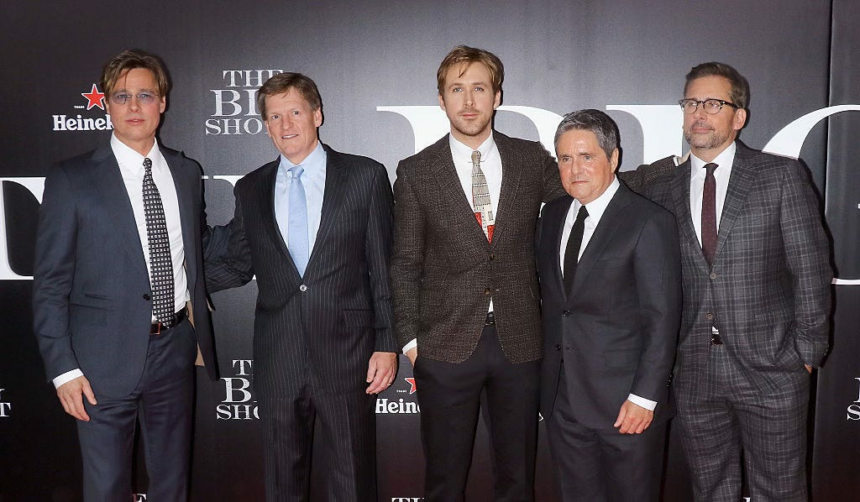
On May 8, 2026, Michael Burry, made famous in the movie “The Big Short,” once again captured Wall Street’s attention after warning that the current U.S. stock market resembles the final stages of the 1999–2000 dot-com bubble. His commentary was supported by bearish positions disclosed by his investment firm, Scion Asset Management, which argued that the rapid rise in artificial intelligence and semiconductor-related stocks mirrors the speculative frenzy that preceded one of the most painful collapses in modern financial history. His focus has centered on the Philadelphia Semiconductor Index (SOXX), which has surged sharply during the AI boom, much like technology indexes did before the March 2000 collapse. While some view Burry’s latest warning as another example of his tendency toward pessimism, others believe his track record of identifying prior market bubbles warrants careful consideration rather than dismissal. As a result, we offer an unbiased look at his forecasting track record to let the reader decide whether to heed his dire views of the U.S. equity market or take his warning less seriously.
Burry’s reputation in financial markets was cemented during the 2005–2008 housing market crash, when he correctly identified the fragility of subprime mortgage-backed securities years before the broader market recognized the risks. His successful short positions against the U.S. housing market were later chronicled in The Big Short, making him one of the most famous contrarian investors of the modern era. At the time, many market participants mocked or ignored his analysis because housing prices had risen steadily for years and mortgage defaults appeared manageable. Burry’s research into deteriorating lending standards and the structure of collateralized debt obligations proved remarkably accurate. That call generated billions in profits for investors who followed him and gave Burry legendary status among those who believe markets periodically become dangerously disconnected from fundamentals.
However, the challenge for investors evaluating Burry’s latest prediction is that his record since 2008 has been far more mixed. While he has repeatedly warned of bubbles, speculative excess, and looming market collapses, many of those predictions either failed to materialize or came much later than expected. Analysts who have reviewed his public warnings estimate that about 71 percent of his major bearish predictions since the financial crisis have been wrong in timing or magnitude, while 29% have been correct and aligned with significant market corrections or bear markets. That split has fueled an ongoing debate within financial circles about whether Burry is a visionary whose warnings arrive too early or are simply incorrect in an era when central bank liquidity, fiscal policy stimulus (e.g., the One Big Beautiful Bill), and technology-driven earnings growth have repeatedly prolonged bull markets.
The People’s Economist with Anthony Chan is a reader-supported publication. To receive information on the latest hot topics of the day, and support my hard work, please consider becoming a free or low-cost ($30.00 per year) paid subscriber, with the promise that this price will never increase.
Several of Burry’s post-2008 warnings have been well documented. In 2019, he warned that passive index investing and exchange-traded funds were creating a bubble like the excesses in subprime mortgage debt before 2008. He argued that massive inflows into passive funds were distorting price discovery and concentrating risk in major indexes. Markets, however, continued to climb over the following year, with the S&P 500 gaining strongly despite his concerns. In 2021, Burry warned of what he called the “greatest speculative bubble of all time,” citing meme stocks, cryptocurrencies, and speculative technology companies. Although certain speculative segments later collapsed, the broader market continued to rise substantially before eventually correcting in 2022. In 2022, Burry repeatedly warned that bear-market rallies were merely “dead cat bounces” and suggested the S&P 500 could fall toward 1,900. While stocks declined sharply that year, markets later recovered significantly, limiting the scale of the downturn he had anticipated. For the record, on May 8, 2026, the S&P 500 closed at 7,398.9!
In early 2023, Burry famously posted a single-word message on social media: “Sell.” That warning came shortly before one of the strongest technology-led rallies in recent years. Unfortunately, enthusiasm for artificial intelligence, combined with resilient corporate earnings and moderating inflation pressures, pushed equities substantially higher in the months that followed. That is why on March 30, 2023, he tweeted: “I was wrong to say sell.” Burry went on to congratulate the “BTFD,” (aka, buy the f***ing dip) generation for their persistence. Sadly, investors who exited the market entirely based on that call missed out on considerable stock market gains. These episodes have contributed to the perception among many analysts that, while Burry may be structurally correct in his valuation analysis, he often struggles with market timing.
Still, Burry’s latest warning has attracted attention because some underlying valuation indicators appear historically elevated. One measure often cited is the Buffett Indicator, which compares total U.S. stock market capitalization to U.S. gross domestic product (GDP). As of May 8, 2026, the latest reading of the Buffett Indicator is 229.9, significantly above its 20-year average of 128.25 and at a level many analysts consider historically extreme. In support of Michael Burry’s view, Warren Buffett has been quoted as saying that whenever this indicator exceeds 200, “it is like playing with fire” and a sign that the stock market is in overpriced territory!
Another metric, often cited by Michael Burry, is the Shiller cyclically adjusted price-to-earnings ratio (CAPE), which stood at 40.1 as of May 8, 2026, near levels seen only at the peak of the dot-com bubble. The Shiller CAPE Ratio (Cyclically Adjusted Price-to-Earnings Ratio) is computed by dividing the current price of the S&P 500 index by the average of its real (inflation-adjusted) earnings over the previous 10 years. The rule of thumb is that when the CAPE ratio exceeds 35, future 10-year annualized real returns tend to move toward 0 percent or even turn negative. Burry argues (which is supported by history) that these valuations suggest stocks have become detached from economic fundamentals and are instead being driven by speculative momentum tied to optimism about artificial intelligence.
Burry has also made the semiconductor sector a central theme in his doomsday view. The Philadelphia Semiconductor Index (SOXX) has risen 70.6% year-to-date, driven by surging demand for AI-related chips, cloud infrastructure, and data center expansion. Companies such as NVIDIA have reported explosive revenue growth, fueled by demand for advanced AI processors. Burry believes the pace of these gains mirrors the unsustainable acceleration seen in technology stocks during the late stages of the dot-com era. He has reportedly purchased put options (which gain if the underlying stock prices fall) on semiconductor-focused exchange-traded funds and has taken bearish positions in several AI-related companies (e.g., Nvidia and Palantir). While Palantir stock has been struggling, Nvidia hit a 52-week high on May 8, 2026.
Semi-Conductor Index (SOXX): Up 70.6% YTD as of May 8, 2026
Burry’s concerns extend beyond valuations. He has argued that markets are increasingly ignoring weak economic signals, such as declining consumer confidence and slowdowns in parts of the real economy, in favor of momentum-driven enthusiasm for AI. He also claims that some companies are overstating profitability through accounting practices, including stock-based compensation and depreciation assumptions. According to Burry, “hyperscalers” are underestimating depreciation by $178 billion and creating what he calls an “earnings illusion,” making their stock valuations appear less stretched than they truly are.
Summary and Concluding Thoughts
Supporters of Burry’s thesis cite several factors that lend weight to his concerns. First, market concentration has become unusually high. A small number of mega-cap technology companies now account for a disproportionately large share of index gains. Historically, periods of narrow market leadership have sometimes preceded heightened volatility.
Second, enthusiasm for transformative technologies can occasionally produce speculative excess. In the late 1990s, investors correctly recognized that the internet would reshape the economy, but many still paid dramatically more for companies that ultimately failed. Some analysts argue the AI boom could follow a similar pattern, in which the technology itself proves revolutionary while investor expectations become unrealistic.
Yet there are also substantial arguments against Burry’s doomsday scenario. One major difference between today’s market and the 1999–2000 bubble is profitability. Many of the leading AI companies currently dominating the market are profitable and generating enormous cash flows. During the dot-com era, numerous internet companies had little or no earnings and limited revenues. Today’s leading technology firms are among the most profitable corporations in history. Companies like Microsoft, Alphabet, and NVIDIA generate billions in earnings and possess substantial pricing power in critical areas of the digital economy.
Another argument against Burry’s forecast involves the nature of AI demand itself. Many analysts believe the current investment cycle reflects genuine infrastructure needs rather than pure speculation. Cloud providers, governments, and enterprises worldwide are investing heavily in AI capabilities, data centers, and semiconductor capacity because they expect AI applications to become deeply integrated into business operations. Unlike many speculative internet startups in 2000, current AI leaders often already have established customer bases and recurring revenue streams.
Critics also highlight Burry’s historical timing issues. Markets can remain overvalued for extended periods, especially when investor sentiment is strong and liquidity conditions are supportive. Investors who followed every bearish call Burry made over the last decade would likely have missed substantial market appreciation. This reality has led some analysts to compare Burry to a smoke alarm that sometimes goes off too early. The alarm may eventually prove correct about the existence of risk, but acting on every warning may prove costly.
The broader debate surrounding Burry ultimately reflects a recurring challenge in financial markets: distinguishing overvaluation from imminent collapse. Markets often become expensive during periods of technological transformation as investors try to price future growth opportunities that are difficult to quantify accurately. Sometimes those expectations prove wildly excessive, as during the dot-com bubble. Other times, transformative technologies justify higher valuations because they fundamentally reshape productivity and profitability across the economy.
For investors, the key question may not be whether Burry is entirely right or entirely wrong, but whether his warning highlights genuine vulnerabilities worth monitoring. His track record shows he can identify structural imbalances before the broader market recognizes them. Yet his history also shows that acting on his warnings too early can carry substantial opportunity costs. The fact that approximately 71% of his bearish calls since 2008 have not materialized underscores the difficulty of accurately identifying market turning points.
Ultimately, from an unbiased perspective, we conclude that investors should be aware that Michael Burry’s market-timing predictions have been correct 29% of the time and incorrect 71% of the time. It would be wise to take this information into account when deciding whether to listen to his latest market prediction, or to take it with a grain of salt!
Thanks for reading The People’s Economist with Anthony Chan! To support my work, please share it with others!
Share
No posts