


Fitbit Air looks like a small product, but it asks a fairly big question for Fitbit users. Do you still want a tracker you interact with all day, or would you rather leave most of that to your phone?
Compared with Charge 6, the missing screen is only the obvious difference. Fitbit Air also changes the fit, the sensors, the workout experience and how much control you have from the wrist.
Check Fitbit Air on Amazon and Fitbit Charge 6 on Amazon for the latest prices.
But let’s roll back.
The most obvious difference is also the one that will decide the purchase for many people. Fitbit Air has no screen. That means you cannot glance at your wrist to check heart rate, steps, pace, workout time or battery level. You also lose the small daily nudges that make a tracker feel alive during the day.
Charge 6 still behaves like a normal Fitbit. You can start workouts from the wrist, check stats mid-session, see notifications, use timers and interact with Google services. That sounds basic, but it is exactly what many Fitbit users still want. A tracker without a screen can feel cleaner, but it can also feel strangely invisible.
That invisibility may suit some people. Air looks better for sleep, recovery tracking and all-day wear under clothing. It weighs only 12 grams with the band and the pebble itself is 5.2 grams. Charge 6 comes in at around 30 grams, which is still light, but not in the same barely-there category.
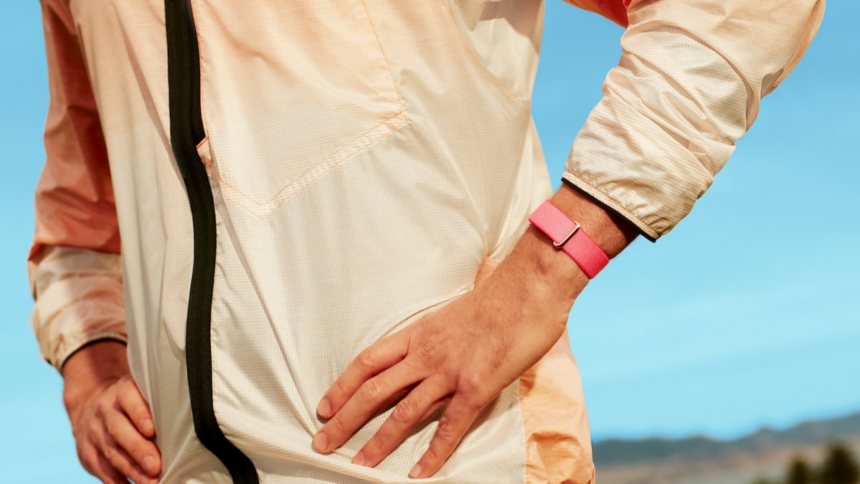
Google has also gone with a two-part setup. The main pod, which Fitbit calls the pebble, slots into interchangeable bands. Buyers can choose between Active, Elevated and Performance styles depending on material and look. The limited edition version is especially nice looking, even if it costs extra.
Google says Fitbit Air brings a 15 percent improvement in sensor accuracy over the previous generation Fitbit. That is a useful claim, especially if Air improves day-to-day heart rate, sleep and activity tracking. It also has automatic workout detection, so users do not need to start every session manually.
Still, there is a catch. Fitbit Air does not appear to use the newer sensor approach found in Pixel Watch 4, which includes a multipath optical heart rate sensor and a far-field temperature sensor. Air sticks with a more traditional setup, including optical heart rate, red and infrared SpO2 sensors, skin temperature variation, accelerometer and gyroscope.
That does not make it weak. It does mean expectations should stay grounded. Wrist-based optical sensors often struggle most during high-intensity intervals, rapid heart rate changes and activities with lots of wrist movement. If Google wants Air to act like a passive recovery band, the sensor package may be enough. If buyers expect Pixel Watch 4-level tracking performance, that is probably the wrong comparison.
Charge 6 has its own advantage here. It includes ECG hardware and EDA sensors, neither of which appear on Fitbit Air. That gives Charge 6 a broader health feature set, especially for users who value on-demand ECG readings or Fitbit’s stress scan tools.
Air does still include FDA-cleared background AFib detection, which means it can watch for signs of irregular rhythm passively in the background. What it cannot do is offer manual ECG spot checks directly from the wrist like Charge 6.
The same logic applies to menstrual cycle tracking and more advanced health insights. Fitbit Air can track skin temperature variation, but its older sensor setup may limit how far Google can push some of the more advanced interpretation. Google Health Coach may still add value through context and trend analysis, but coaching can only work with the signals the hardware collects.
Fitbit Air lasts up to seven days. Fitbit Charge 6 also lasts up to seven days. That makes the battery story a bit awkward for Air, because dropping the screen does not bring a longer advertised runtime.
Air does charge faster, though. Google quotes 90 minutes for a full charge and around one day of use from five minutes on the charger. The charger also does not need to be oriented in a specific direction when attaching to the device, which is a small but useful convenience.
The screenless design also changes how alerts work. Air includes a vibration motor for Smart Wake alarms, regular alarms and low battery notifications. There is also a small LED used for battery status and pairing feedback.
Charge 6 takes around two hours to fully charge. It also loses battery faster when features such as always-on display and SpO2 tracking come into play. So Air may feel more efficient in real life, even if the headline battery number stays the same.
For workouts, Charge 6 remains the stronger device. It has built-in GPS and GLONASS, more than 40 exercise modes, heart rate broadcasting to compatible gym equipment and wrist-based workout controls. You can run without carrying your phone and still see your stats as you go.
Fitbit Air relies on connected GPS through the phone. That is fine for casual users who already take their phone on walks or runs. It is less appealing for anyone who wants the tracker to operate independently outdoors.
The lack of screen also changes the workout experience. Air can log activity automatically and record app-started workouts, but it cannot show pace, heart rate zones or elapsed time on the wrist. That pushes it closer to WHOOP-style passive tracking than a classic Fitbit fitness band.
Still, Air is not completely stripped back. It supports Cardio Load, Daily Readiness and heart rate broadcasting to certain compatible devices and gym equipment. Heart rate is also stored at 2-second intervals, which should help preserve workout detail reasonably well for a screenless tracker.
One odd limitation is offline storage. Air can keep seven days of detailed motion data, but only one day of workout data before syncing. That feels slightly restrictive for a device built around passive tracking.
Charge 6 owners should not treat Fitbit Air as a straight upgrade. Air is lighter, cleaner looking and cheaper. It also brings automatic activity logging and improved sensor accuracy compared with Fitbit’s earlier tracker generation.
But the trade-offs are big. You lose the screen, built-in GPS, ECG, EDA, NFC payments, Google Maps, YouTube Music controls and on-wrist workout stats. You also do not gain longer battery life. For many Charge 6 users, that makes Air feel more like a second device than a replacement.
Fitbit Air makes more sense for people who want a low-profile health tracker to wear all day and all night. It could also work well for Pixel Watch users who want something lighter for sleep tracking while keeping a smartwatch for daytime use. Google is clearly leaning into that idea, with Air positioned as a background tracker rather than a mini smartwatch.
Charge 6 remains the better all-rounder. Fitbit Air is the more interesting product, but Charge 6 is still the safer buy for most people who want one Fitbit to handle workouts, health checks and daily wrist interaction. Air is for people who want less on the wrist, not more.
Check Fitbit Air on Amazon and Fitbit Charge 6 on Amazon for the latest prices.
Don’t miss the latest from Gadgets & Wearables
Subscribe to our monthly newsletter and check out our YouTube channel.
You can also follow Gadgets & Wearables on Google News and add us as a preferred source in Google Search.

Marko founded Gadgets & Wearables in 2014, having worked for more than 15 years in the City of London’s financial district. Since then, he has led the company’s charge to become a leading information source on health and fitness gadgets and wearables. He is responsible for most of the reviews on this website.
Marko Maslakovic has 3076 posts and counting. See all posts by Marko Maslakovic
Your email address will not be published.
This site uses Akismet to reduce spam. Learn how your comment data is processed.
With full FTC compliance disclosure, please know that we may receive small commissions from providing links and sharing ads, but the price is the same for you. The team has your best interest at heart, we care as much about your health as you do.
Gadgets & Wearables is a participant in the Amazon Services LLC Associates Program, an affiliate advertising program designed to provide a means for us to earn fees by linking to Amazon.com and affiliated sites. As an Amazon Associate we earn from qualifying purchases.
We are independently owned and all opinions expressed here are our own. View our affiliate disclosure.
Pongbot PACE S PRO: One minute review The Pongbot PACE S PRO has genuinely changed how I approach solo practice.
AFFILIATE DISCLOSURE
Gadgets & Wareables Ltd is a a participant in the Amazon Services LLC Associates Program, an affiliate advertising program designed to provide a means for us to earn fees by linking to Amazon.com and affiliated sites. As an Amazon Associate we earn from qualifying purchases. View our affiliate disclosure.
Amazon and the Amazon logo are trademarks of Amazon.com, Inc. or its affiliates.
Should Charge 6 owners move to Fitbit Air vs stay put – Gadgets & Wearables



Leave a Comment