


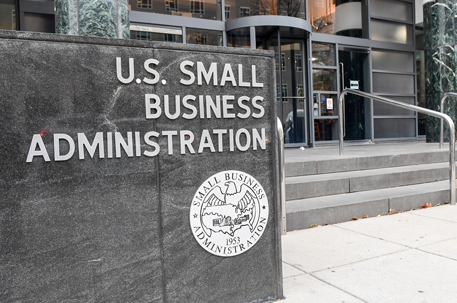
A new bill seeks to designate military spouse-owned businesses as a disadvantaged category under the SBA’s 8(a) Business Development Program.
Military spouses headed to Capitol Hill Thursday to advocate for the Military Spouse Small Business Recognition Act — a bill designed to expand access to capital and Small Business Administration resources for military spouse entrepreneurs — and to secure a commitment from lawmakers to sponsor the legislation.
More than 50 military spouse-owned businesses participated in the advocacy effort, meeting with lawmakers and congressional staff to push for legislation that seeks to designate military spouse-owned businesses as a disadvantaged category under the SBA’s 8(a) Business Development Program.
The designation would reduce borrowing costs for military spouse entrepreneurs by waiving SBA loan guarantee fees for loans up to $1 million — fees that can add thousands of dollars to the cost of financing.
It would also reduce equity injection requirements by at least 5%. Currently, military spouses seeking to start or purchase a business are required to put down between 15% and 20% of the funding upfront.
Join us May 11 for Federal News Network’s Risk & Compliance Exchange as government and industry experts discuss how to navigate evolving cybersecurity mandates and accelerate secure adoption of emerging technologies.
“The 5% reduction might not sound like much, but it can be the difference between being able to afford and apply for that loan and not,” Stephanie Brown, CEO of the Military Spouse Chamber of Commerce, who is leading the effort, told a small group of reporters Thursday.
In addition, the designation would allow military spouse-owned businesses to compete for set-aside and sole-source federal contracts worth up to $4 million for goods and services, while providing greater access to mentorship, training and other business development resources.
The legislation would also require the SBA to track and report data on military spouse participation in SBA loan programs.
“Something our community is desperate for is more data. Right now, we don’t have that comprehensive data on how many military spouses are accessing SBA programs, whether they’re being approved or denied, and where those gaps are. This reporting requirement will allow us to measure progress and identify where additional support is needed,” Brown said.
The push comes as military spouse unemployment continues to significantly outpace the national average. Despite years of advocacy and policy efforts, the unemployment rate among military spouses has held steady at around 22% — or about five times the national average.
Frequent relocations, deployments and the lack of affordable and reliable childcare continue to affect military spouse employment. As a result, entrepreneurship has increasingly become one of the more viable career paths for military spouses who often move every two to three years. Nearly half of military spouses — approximately 48% — are either self-employed, own small businesses or are interested in entrepreneurship.
Patricia Barron, former deputy assistant secretary of defense for military community and family policy, said spouse unemployment remains a major factor driving service members out of the military, affecting retention and force readiness.
Sign up for our daily newsletter so you never miss a beat on all things federal
“If mama ain’t happy, nobody happy. When you are not happy, you make it known. And after a while, you sit down at that kitchen table and you start thinking about the future and whether or not you should leave the military or stay,” Barron said.
“It ultimately comes down to the fact that it’s hard out there to retain employment when you move 11 times in 18 years. It’s hard to reinvent yourself, and so many military spouses will then say, ‘Let me take control of this myself, and I will start my own business and control my path forward.’ It’s also very hard,” she added.
Michelle Penczak, CEO and founder of the virtual assistant company Squared Away, said she created her business after struggling to find employment as a military spouse. The company, launched in 2017, has since hired more than 1,600 military spouses into remote roles and generated more than $30 million in pay for military families without outside funding.
“Military spouses are not a risky investment. We’ve already proven the model works,” Penczak said.
“We’re underutilized, and imagine what we can do at scale. The bill isn’t about recognition. It’s about access to capital, to resources, and ultimately to government contracts. If companies like Squared Away had access to government contracting opportunities, we could create so many more jobs for military spouses,” she added.
Brown said two members of Congress are currently reviewing the bill.
“It’s being reviewed by the folks that we can’t share at this time, but that we assume are going to be co-sponsoring, and then we’ll take another look at it based on their feedback,” Eliza Levy, founder and CEO of ELPR, said.
Brown acknowledged the legislation could face scrutiny over both its cost and why military spouses should receive a separate designation instead of qualifying through existing categories such as women-owned small businesses.
“We’re ready for any objection, and hopefully it will be a bipartisan effort, and everybody will recognize that it’s deserving and it will be a big game changer,” Brown said.
Read more: Defense News
It is unclear what legislative strategy potential backers of the bill would pursue — standalone bills often face political hurdles, and lawmakers frequently try to attach such proposals to larger legislative packages like the annual National Defense Authorization Act to increase their chances. Brown said using the NDAA would be the goal if “that’s determined to be the best vehicle to move this forward.”
If you would like to contact this reporter about recent changes in the federal government, please email anastasia.obis@federalnewsnetwork.com or reach out on Signal at (301) 830-2747.
Copyright © 2026 Federal News Network. All rights reserved. This website is not intended for users located within the European Economic Area.
Military spouses press Congress to expand small business opportunities – Federal News Network


Leave a Comment