


Share article
Print article
In central Seoul, South Korea, a motorway once covered a buried urban stream. Today, that same stretch has been uncovered – a process known as daylighting – and this river is home to plants, fish and insects. This flowing water cools the city in summer and attracts tens of thousands of people every day. What used to be concrete now boosts biodiversity, the local economy and community wellbeing.
Similar transformations are unfolding elsewhere.
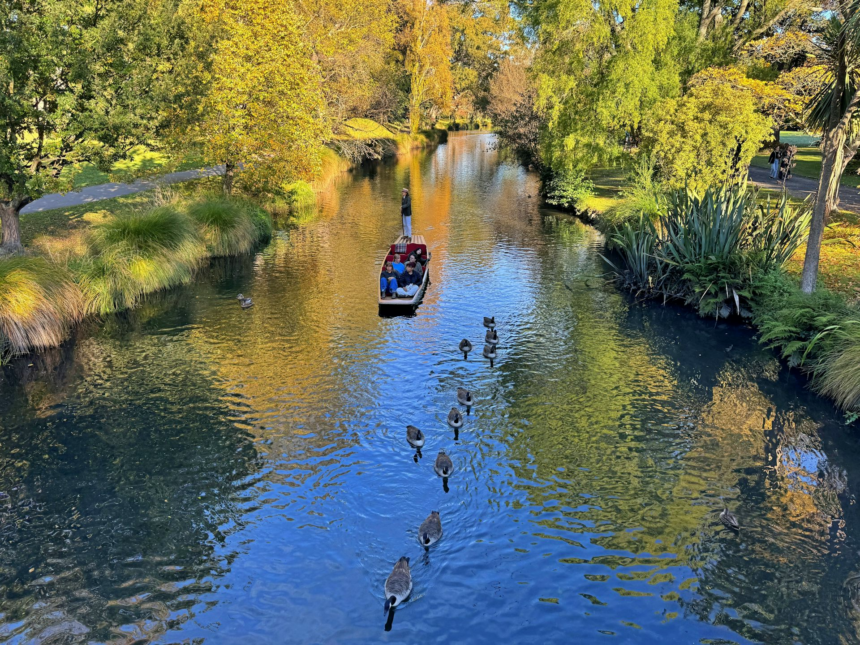
In Christchurch, New Zealand, river habitats and wetlands were rebuilt after a major earthquake in 2011, guided in part by Māori knowledge of waterways and floodplains. In Vancouver, Canada, nature-based stormwater systems have been integrated into urban design through long-term collaboration with local First Nations.
Across the world, urban planning projects are beginning to take a different approach. One that designs with living freshwater systems, rather than trying to control and contain them.
In a new study, our international team of freshwater scientists and planning experts highlights that, while our towns and cities contain some of the world’s most degraded rivers, wetlands and ponds, they also provide huge opportunities for protecting and restoring freshwater wildlife.
Cities and towns have historically been designed with people in mind. Planning systems prioritise housing, transport, economic growth and flood defence – often treating rivers and streams as infrastructure rather than living ecosystems.
This hasn’t always been the case. Ancient civilisations, from the Indus to the Maya, built settlements around water. They worked with floods, wetlands and seasonal flows in ways that supported both people and nature. With the dawn of industrialisation and modern planning, floodplains were built on, rivers were straightened, streams buried and waterways increasingly engineered to move water through cities rather than support wildlife.
The consequences are stark and hard to ignore: degraded urban waterways, declining freshwater species, and whole cities are more vulnerable to climate-driven floods, heatwaves and water scarcity, contributing to a global collapse in freshwater biodiversity.
Our rivers, lakes, ponds and wetlands occupy only a tiny fraction of the planet while supporting roughly a third of all vertebrate species. Importantly, freshwater acts as an ecological life-support system, sustaining a range of species – including us.
This is why the latest figures are so alarming. Freshwater vertebrate animals such as salmon and eel populations have fallen by 85% over the last 50 years. This is one of the steepest collapses of any group of species on Earth. Urban waterways sit at the heart of this rapid decline.
Movement to deal with this crisis has started. Countries have signed up to ambitious global agreements, pledging to halt and reverse biodiversity loss.
But translating these promises into real change remains a major challenge.
Urban planners shape the very environments where freshwater pressures are most intense – towns and cities. Every day, they make decisions affecting how land is zoned, how stormwater is managed, where green space goes, what buffers are protected, and how urban form evolves. Their actions ripple through entire catchments.
Yet most urban planners often aren’t supported or equipped with the ecological knowledge needed to incorporate freshwater biodiversity into daily practice.
Urban planners need the tools, training and support to recognise freshwater ecosystems as valuable living systems that underpin city resilience, human health and everyday wellbeing – rather than obstacles to be overcome.
In cities such as Breda in the Netherlands, Los Angeles in the US and Nanjing in China, this different way of thinking about freshwater is taking hold. And planners aren’t working alone.
Local residents and Indigenous communities, ecologists, engineers and even schools are often involved from the outset. Together, they bring diverse knowledge of the local context and can build a shared environmental stewardship. Early collaboration helps ensure freshwater biodiversity isn’t an afterthought and results in lasting care for rivers, ponds and wetlands.
Education matters too.
To foster this transition, silos between planning, ecology and engineering can be broken down. Land-use decisions can then be made with a clearer understanding of how water behaves across an entire catchment and how that shapes freshwater habitats.
Just as important is how knowledge flows. Freshwater biodiversity research doesn’t always reach the people making day-to-day planning decisions, or those designing and building projects on the ground. When planners, scientists and delivery teams have access to shared tools, open data or simple design guidance, nature-positive ideas are far more likely to make it off the page and into our cities.
Clear rules are also useful. Biodiversity targets only make a difference if they are backed up by practical local standards and the resources to implement them. For example, we need standards on how to protect riverbanks, restore floodplains or design stormwater systems that work with nature, rather than against it. Without that clarity – and the training and resources to support it – planners are often left trying to balance competing demands on their own.
There are still big gaps in what we know. How much space do urban rivers really need, and how does this vary from place to place? Which nature-based solutions work best across different landscapes? Urban planners can help answer these questions by learning from what works and using that knowledge to improve outcomes for freshwater biodiversity.
Urban planners – often working behind the scenes within local and devolved governments – are at the forefront of this transformation. They can embed freshwater biodiversity into the hearts of our cities.
However, planners cannot do this alone. Freshwater scientists, policymakers, river restoration specialists, engineers, social scientists and economists can work with planners. Universities and professional bodies can rethink how planning is taught. Governments can recognise planners as agents of ecological recovery, not just arbiters of urban growth.
Cities could become hubs for freshwater restoration and recovery, rather than hotspots of decline. They can become places where rivers, wetlands and people thrive together – with benefits that flow far beyond city boundaries.
Research Fellow and Centre Manager, Centre for Blue Governance, University of Portsmouth
Professor of Biology, McGill University
Canada Research Professor, Conservation Physiology, Carleton University
Helen A. L. Currie receives funding from UKRI Engineering & Physical Sciences Research Council Noise Network +.
Irene Gregory-Eaves receives funding from the Natural Sciences and Engineering Research Council of Canada.
Steven J Cooke receives funding from the Natural Sciences and Engineering Research Council of Canada. He is appointed as Canadian Commissioner for the Great Lakes Fishery Commission. 


McGill University and Carleton University provide funding as members of The Conversation CA.
McGill University and Carleton University provide funding as members of The Conversation CA-FR.
University of Portsmouth provides funding as a member of The Conversation UK.
View all partners
https://doi.org/10.64628/AB.d6qd9h45x
Indigenous Family Liaison Officer
Research Operations Manager
Manager, Academic Services
Lecturer or Senior Lecturer, Digital Health – AI in Medicine
Executive Director, Future Students | UTS College
Copyright © 2010–2026, The Conversation Media Group Ltd
How to build cities for wildlife, not just people – new research – The Conversation



Leave a Comment