Since its founding in 1922, Foreign Affairs has been the leading forum for serious discussion of American foreign policy and global affairs. The magazine has featured contributions from many leading international affairs experts.
DANNY CITRINOWICZ is a Senior Researcher in the Iran and Shiite Axis Program at the Institute for National Security Studies. Previously, he served as the head of research and analysis for Iran in the Israel Defense Forces’ intelligence unit.
The Unintended Consequences of the U.S.-Israeli Assault
Danny Citrinowicz
In early February, according to The New York Times and other outlets, Israeli Prime Minister Benjamin Netanyahu convinced U.S. President Donald Trump that airstrikes could help catalyze an anti-regime rebellion within Iran. But after the Israeli and U.S. militaries launched a war on the Islamic Republic at the end of the month, eliminating Supreme Leader Ayatollah Ali Khamenei and other key regime figures, the Islamic Republic did not collapse. Instead, internal pressure appears to have consolidated it around hard-line elements.
It didn’t have to be this way. The protests that erupted in Iran in late December—one of the country’s most serious waves of unrest since the 1979 Islamic Revolution—were only the most public illustration of a process of internal change that had been gaining momentum. The regime was under severe economic strain and faced profound popular discontent. Even after a January brutal crackdown on demonstrators, the government remained very fragile. In response, it had already begun to loosen some socially repressive policies and seek a deal with the United States that would exchange military and nuclear advancements for sanctions relief.
But instead of accelerating that change, the U.S.-Israeli war set it back. Khamenei’s death disrupted Iran’s evolution and provided the regime with an opportunity to consolidate. Paradoxically, the external pressure meant to topple the Iranian regime has helped preserve it.
Before the recent war, the Iranian regime had been suffering from a legitimacy crisis. Voter turnout for Iran’s March 2024 parliamentary election barely topped 40 percent, the lowest since 1979. The selection of the relatively moderate Mahmoud Pezeshkian as president suggested that the regime knew it needed to respond to public discontent. Later that year, Tehran paused implementing a stricter hijab law, and by late 2025, Iranians had become increasingly willing to flout regulations, with women appearing unveiled in public and socializing in mixed-gender groups. According to a November 2025 Reuters report, Iranian officials and analysts claimed the regime was altering its policies because it feared public anger. Pressure for change, in other words, had become strong enough to shift the regime’s tactics.
But these shifts were not enough to avert mass protests. Starting in December 2025, hundreds of thousands of Iranians took to the streets in response to unbearable economic misery. In 2025, the rial lost half its value, and inflation crept up to nearly 50 percent. The World Bank forecast a 2.8 percent contraction of the economy in 2026. Tehran was able to quell the protests with unprecedented violence, but Iran’s failing infrastructure, visible corruption, and economic frailty remained. Staying the course would only continue to erode Iran’s internal stability. The Islamic Republic would have to change the regime’s ideology in order to preserve it. (A genuine ideological shift, particularly on military matters, would help pave the way for a comprehensive agreement with the United States that includes broad sanctions relief.)
Meanwhile, Khamenei, at 86, was ailing. Had a succession process followed his natural death, a gradual internal transformation would likely have unfolded in Tehran. Without the war, the ascent of Khamenei’s son Mojtaba—who was not his father’s preferred successor but was backed by the Islamic Revolutionary Guard Corps (IRGC)—would have been far less certain. The Assembly of Experts, tasked with choosing Khamenei’s successor, would have been able to convene in an orderly and deliberate manner and consider which candidate could best secure the regime’s future in the face of immense challenges. Figures such as Hassan Khomeini, the grandson of the Islamic Republic’s first supreme leader and a relative moderate who might have led Iran toward greater political openness, would have been seriously considered. But the U.S. and Israeli decision to attack foreclosed these alternate pathways and strengthened the position of hard-line actors.
At the core of this misjudgment was a flawed analogy likening Iran to Venezuela. Although reports do not suggest that the proposal for Iranian regime change that Israel made to Trump in February explicitly mentioned Venezuela, it portrayed a series of swift, concrete military steps—such as assassinating Khamenei—leading to the downfall of the Islamic Republic. That notion resonated with Trump, who was riding a high following the U.S. military’s early January removal of Venezuelan President Nicolás Maduro. Trump’s circle implicitly treated Iran as a similarly brittle, leader-centric system susceptible to rapid change under sufficient pressure.
But Iran was nothing like Venezuela. It has a layered institutional framework—clerical, military, and bureaucratic—designed to absorb shocks and ensure continuity under stress. U.S. and Israeli assessments likely identified real vulnerabilities, including the Iranian people’s dissatisfaction with the regime. But they overestimated the power of external pressure to trigger systemic collapse.
Instead, Mojtaba became a central figure in a tightly managed succession process. Power shifted decisively toward the security establishment as the IRGC expanded its influence over key decision-making bodies, including the presidency and the Supreme National Security Council. The emerging configuration appears more centralized, more militarized, and less constrained by competing factions. Tehran, for instance, has launched aggressive attacks on Gulf Arab states, countries with which Khamenei previously sought entente. It has refused to end the war without firm guarantees, unlike during last June’s 12-day war. It has showed off long-range missile capabilities of the kind Khamenei sought to limit. And although previous Iranian leaders approached escalation in the Strait of Hormuz with caution, the current leadership, shaped by crisis and dominated by hard-liners, had no compunctions about closing it.
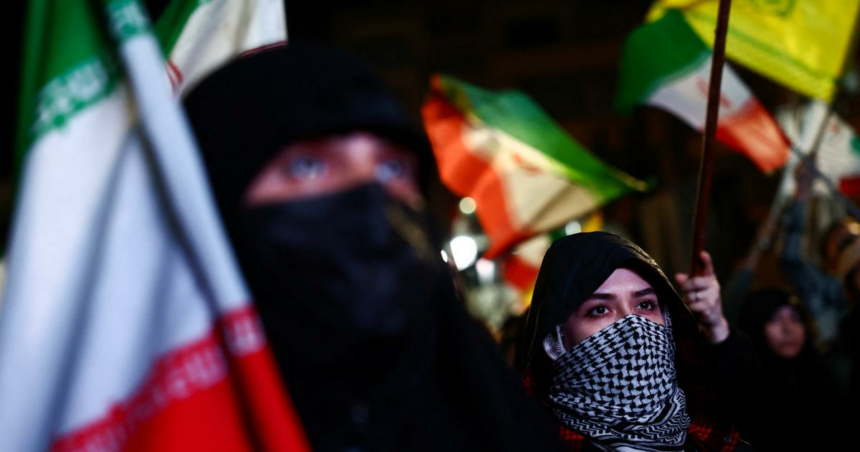
The emerging post–Ali Khamenei regime thus reflects transformation as well as continuity. The Islamic Republic has endured and even become more aggressive. This transfiguration mirrors the conditions that enabled the Islamic Republic’s rise in the first place. Tehran has responded to the current confrontation with outside forces much as it did during the 1979 revolution: it has closed ranks, particularly among regime supporters, Revolutionary Guard leaders, and members of the Basij, a state-organized militia whose main mandate is to suppress domestic dissent. The existential struggle against Israel and the United States has superseded regime supporters’ disagreements. And it has rallied support around the Islamic Republic and its leadership, as reflected in the large-scale, sustained demonstrations in support of the regime since the start of the war. The regime may be weaker on paper in the wake of the attacks, but it is much more resilient.
Some may believe that after the war ends, the same familiar pressures will again exert themselves on Tehran: the pain of sanctions, the stress of popular disillusionment. But the war may well end up easing these pressures in the longer term, in part by prompting the United States to reduce sanctions. The war has already led to engagement between Tehran and Washington at the highest levels to discuss precisely the kind of economic relief U.S. officials were never previously willing to grant. In other words, the conflict is not only hardening the regime’s resolve but also affording it new forms of recognition that could materially change its economic outlook. Economic growth, in turn, could dampen popular discontent and reestablish the regime’s legitimacy.
Even if segments of the Iranian population want a less socially restrictive system, in the near term internal repression is likely to intensify against any signs of dissent. And as Iran’s religious establishment declines in influence compared with the IRGC, the regime may become more willing to ease certain religious restrictions in the public sphere. Together, these trends may reduce the likelihood of large-scale public protests, even if economic pressures persist.
Instead of learning from what has transpired since late February, elements within the U.S. administration appear to still be operating according to the flawed Venezuela analogy. Trump and his vice president, JD Vance, continue to perceive figures such as the speaker of Iran’s parliament, Mohammad Bagher Ghalibaf, as the potential equivalent of Venezuela’s Delcy Rodríguez. In mid-April, Vance claimed that Ghalibaf “effectively runs Iran.” This is wishful thinking: in truth, ultimate authority now rests singularly with a group of leaders. And these leaders, including Ghalibaf, are deeply invested in the Islamic Republic’s core revolutionary principles and motivated to avenge past confrontations. The notion that even Ghalibaf could be a partner in transforming Iran’s strategic orientation is unrealistic. Continuing to compare Iran to Venezuela will lead the United States to keep underestimating the regime’s ideological component and assume that everything can be bought with money or coerced through threats.
Such a mindset and lack of understanding could lead to renewed war at a much higher intensity—inflicting far greater damage to the global economy and entangling Washington in a prolonged, potentially endless conflict. Or it could yield an agreement that provides Tehran economic relief, extending the life of a previously embattled regime and making it even more eager to exploit loopholes and advance its military objectives under the radar. Although Khamenei was an ideologue, he was not dogmatic. He was often wary of taking unnecessary risks and preferred to listen to all sides in strategic discussions. He proved willing to work with the Obama administration to reach a nuclear agreement; he hesitated to join Hamas in war after the October 7, 2023, attack on Israel; and he was cautious in responding to Israeli strikes in 2024. Most consequentially, although he advanced Iran’s nuclear program, he was reluctant to acquire nuclear weapons and even issued a fatwa against them.
But with his death, the fatwa is gone. And with a stockpile of approximately 440 kilograms of uranium enriched to 60 percent, Iran already possesses a substantial technical foundation for making nuclear weapons. Under a more ideologically rigid and security-dominated leadership, the threshold for weaponization will almost certainly be lower than in the past, no matter what the regime agrees to on paper. And nuclear weapons now appear even more strategically valuable as the ultimate guarantor of regime survival. The United States’ treatment of North Korea reinforces the idea that nuclear capability can translate into both deterrence and diplomatic leverage. Paradoxically, a strategy intended to prevent a nuclear outcome may have made one more likely.
But perhaps the war’s grimmest outcome is that it stifled a potential internal transformation. Regime change strategies often fail not because regimes are inherently strong but because they are adaptable. In Iran’s case, external pressure did not fracture the system; it reinforced the position of its most hard-line figures. The result is an Iran that is less predictable, less restrained, and probably more dangerous.
Subscribe to Foreign Affairs to get unlimited access.
Already a subscriber? Sign In
How Critical Minerals Will Scramble Geopolitics
Rabah Arezki, Frederick van der Ploeg, and Michael Ross
America Should End the War but Keep Up the Pressure
Richard Nephew
Even on the Sidelines, Ankara Faces Blowback
Asli Aydintasbas
And How America Can Avoid Playing Into Their Hands
Jon B. Alterman and Ali Vaez
The Pro-Israel Case for Ending U.S. Aid
Raphael BenLevi
How Perceptions Shape a Conflict’s Outcome
Dominic Tierney
America Should End the War but Keep Up the Pressure
Richard Nephew
The Strange Triumph of Kim Jong Un
Jung H. Pak
Why Wealthy Elites Come to Regret Their Bargains With Authoritarians
Christopher Hartwell and Tricia D. Olsen
Like Taiwan, the South China Sea Could Spark a U.S.-China War
Henrietta Levin
Russia, China, and the Growing North Korea Threat
Oriana Skylar Mastro
Even on the Sidelines, Ankara Faces Blowback
Asli Aydintasbas
The Case for a Cold Peace
Victor Cha
Our editors’ top picks, delivered free to your inbox every Friday.
* Note that when you provide your email address, the Foreign Affairs Privacy Policy and Terms of Use will apply to your newsletter subscription.
Published by The Council on Foreign Relations, Inc.
© 2026. All Rights Reserved.
From the publishers of Foreign Affairs
We and third parties may collect data using cookies and similar technologies for site functionality and advertising. Choose “Accept All” to consent to optional cookies. Manage your preferences in our cookie consent form. Privacy Policy.
Our editors’ top picks from the week, delivered on Friday.
* Note that when you provide your email address, the Foreign Affairs Privacy Policy and Terms of Use will apply, and you will receive occasional marketing emails.