Adapting to a changing world, Japan deepens cooperation on security, supply chains, and sustainable development between the two regions.
Ambassador Extraordinary and Plenipotentiary of Japan to the State of Qatar.
Save
Share
The world is now in the middle of the most significant structural change since the end of the second world war. Amid shifts in the balance of power and the intensification of conflicts and confrontations, the free and open international order based on the rule of law faces serious challenges across the international community, including the Indo-Pacific. At the same time, the presence of the Global South is growing, and it is playing a larger role in international affairs.
Ten years ago, Prime Minister Abe advanced the vision of a Free and Open Indo-Pacific (FOIP) based on the recognition that the Indo-Pacific would become the centre of the world’s development and that making this region free and open — including by enhancing connectivity — would contribute to the development of the entire world. Today, in response to the changes and new challenges of the past decade, Japan will strategically evolve FOIP. Economic security has become an extremely important issue for many countries, and building resilient supply chains is now one of the most important tasks. Support for capacity building, for example in maritime security, has also become essential.
While adapting FOIP to the times, its basic principles do not change: upholding freedom and the rule of law, and respecting diversity, inclusiveness, and openness. Through a wide range of initiatives suited to current realities, Japan will proactively fulfil the role and responsibilities expected of us by the international community.
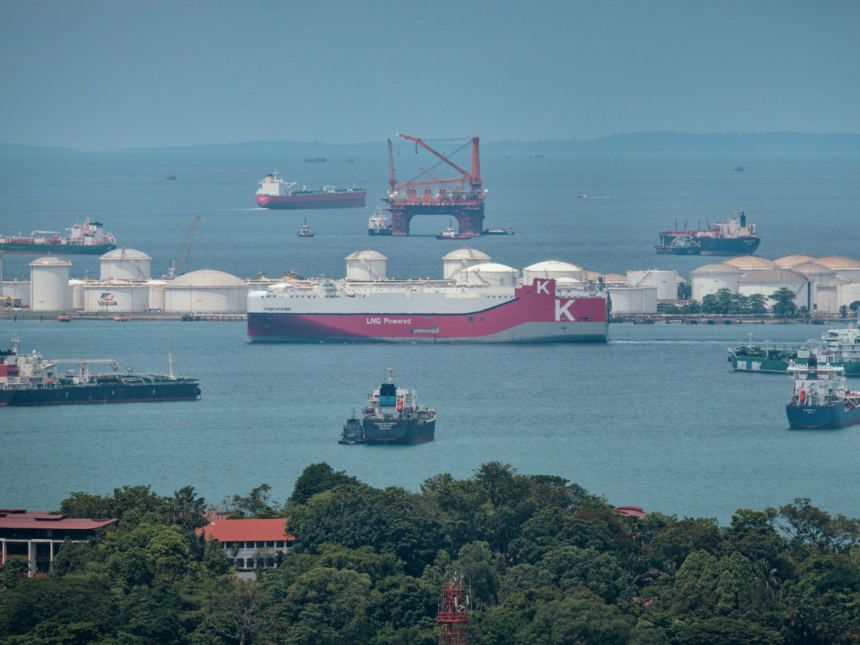
In this context, Japan believes that it is essential to ensure the free and safe navigation of vessels of all nations through the Strait of Hormuz. Restoring stability in the Strait of Hormuz, a strategic chokepoint for global logistics and an international public good, is urgently needed. Japan joined the joint statement issued to this effect on March 19, 2026, and is strengthening its cooperation with relevant countries and organisations such as the International Maritime Organization (IMO). Japan will continue to work closely with the international community and remains committed to taking all possible measures within its capacity.
Japan and partners across the Middle East have deepened relations, working together as trusted, mutually beneficial, and forward-looking partners. Building on this foundation, we will continue to advance cooperation that contributes to regional stability and shared prosperity.
Japan has consistently contributed to the peace and prosperity of the international community since the end of the war. Our stance — observing international law, including the UN Charter, and working to maintain and strengthen a free and open international order based on the rule of law — is well known and will not change. Japan maintains an exclusively national defence-oriented policy as its basic defence posture, and with respect to the right of collective self-defence as recognised under the UN Charter, our domestic law limits the situations in which it can be exercised.
Japan’s security policy is anchored in three documents—the National Security Strategy of Japan, the National Defence Strategy, and the Defence Buildup Program (the Three Strategic Documents). Since their revision in 2022, the security environment has changed at an accelerating speed across many domains, with countries preparing for new ways of warfare, including the mass deployment of unmanned systems, and for the possibility of protracted war. In this situation, Japan needs to proceed with the fundamental reinforcement of Japan’s defence capabilities in response to the most severe and complex security environment of the post-war era; this reinforcement is not targeted at any particular country.
Global challenges to be addressed by the entire international community are piling up, and this is an era when cooperation is required more than ever. Japan opposes opaque expansion of military capabilities or unilateral attempts to change the status quo by force or coercion and draws a clear line against them. At this historical turning point, we must secure the peace, safety, and prosperity of our countries and peoples; maintain and strengthen an international order grounded in values and principles such as freedom, democracy, human rights, and the rule of law; and actively create a peaceful and stable international environment. To this end, Japan, in cooperation with partners across the Middle East and beyond, has pursued, and will continue to pursue, diplomacy that leads the world away from division and confrontation and toward reconciliation and cooperation.
Japan’s diplomacy respects the diversity of all nations and engages with partners on an equal footing to discuss shared challenges and deliver finely tuned support that responds to genuine needs. Under the multilateral trading system, Japan has championed free trade and promoted the rules-based free and fair international economic order. At the same time, grounded in the concept of human security, we have supported developing countries, including through capacity-building cooperation, and worked to solve global issues such as the achievement of the Sustainable Development Goals (SDGs). Japan has actively contributed to nuclear disarmament and non-proliferation and to international peacebuilding. As the world reaches a historical turning point, we will continue this diplomatic stance in close cooperation with partners in the Middle East.
Looking ahead, FOIP will be advanced together with the Middle East through practical cooperation: strengthening resilient supply chains, enhancing maritime security and safe sea lanes, improving high-quality connectivity, and supporting human-centred development, all in line with local priorities. Japan will continue to promote investment, and offer capacity-building support — demand-driven and tailored — and provide official development assistance (ODA) to help create a free, open, and inclusive regional environment.
FOIP at 10 is not a static slogan. It is a living framework to maintain and strengthen a free and open international order based on the rule of law, and a bridge from division and confrontation to reconciliation and cooperation—across the Indo-Pacific, the Middle East, and beyond.
The views expressed in this article are the author’s own and do not necessarily reflect Al Jazeera’s editorial stance.
Follow Al Jazeera English: