


An ancient Roman quarry in Italy supplied a specialized volcanic material that helped builders make durable, high-performance mortar for a major bath and theater complex. A new study led by Simone Dilaria of the University of Padova was published in PLoS One.
The research links the Roman quarry to the mortar used at the Via Scavi site in Montegrotto Terme and shows the material was chosen for its technical value, not simply because it was nearby.
The study examined mortar from the early Imperial complex at Via Scavi, a site that includes baths, pools, water structures, and a small theater. Researchers analyzed nine samples taken from wall joints and structural cores.
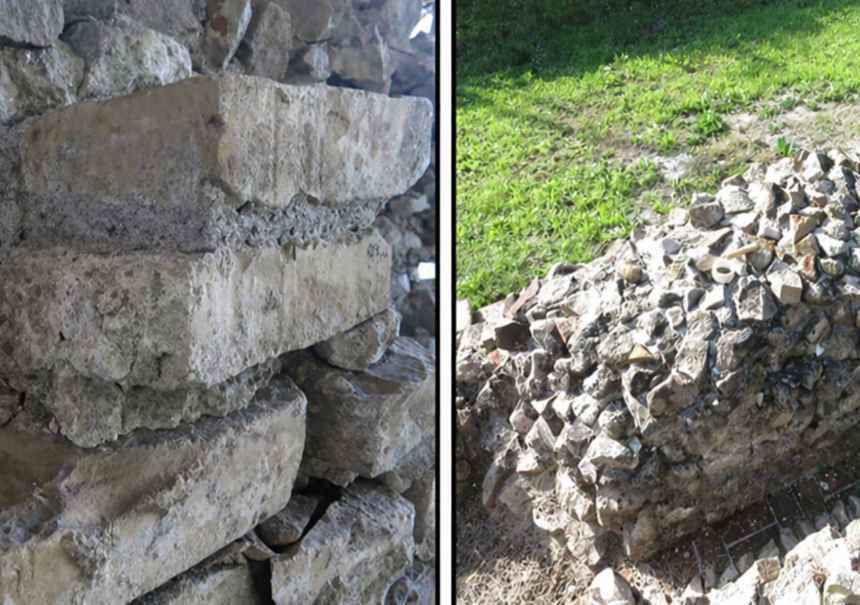
They found that the mortar was lime-based and packed with coarse volcanic fragments that actively reacted with the lime. That reaction produced compounds linked to strong and water-resistant mortar.
The volcanic pieces were angular breccias, not ordinary sand or crushed stone. Under microscopic and chemical analysis, many of the fragments showed clear reaction rims where they met the lime binder.
Researchers said those zones reveal strong pozzolanic behavior, meaning the volcanic material helped the mortar harden and perform well in wet conditions. The study also found reaction products typical of Roman hydraulic mortars.
To track the source, researchers compared the mortar fragments with a large reference database of volcanic rocks from the Euganean Hills, the main volcanic district in the Veneto region.
The first comparison narrowed the likely source to two breccia outcrops in the eastern part of the district, near Villa Draghi and Via Scagliara. Further tests then separated the two.
The clearest match came from Villa Draghi. Researchers reached that conclusion after studying the chemistry of the rock fragments and then looking at individual minerals inside them. Magnetite crystals proved especially useful.
The same unusual silicon-rich banded texture seen in the mortar fragments appeared in samples from Villa Draghi, but not in the material from Via Scagliara. That gave researchers what they described as a firm fingerprint for the quarry source.
The finding matters because the quarry had not been recognized in earlier historical records as a source of pozzolanic building material. The study says Roman builders were exploiting volcanic breccia from outcrops that were later forgotten, overgrown, or misidentified.
Evidence of manual extraction survives at the quarry, including pick marks and tunnel cutting. Survey work has also shown that the quarry front was substantial.
Researchers said the result points to a detailed practical knowledge of local geology. Roman builders appear to have used harder volcanic stone for paving and blocks, while reserving softer volcanic breccia for mortar production.
The study also suggests the material moved beyond the local area. Similar volcanic fragments identified earlier at the Great Baths of Aquileia, about 150 kilometers (93 miles) away, match the same Euganean source and likely the same quarry.
That suggests this ancient Roman quarry in Italy fed not only nearby construction, but also a broader regional supply network over several centuries.
See all the latest news from Greece and the world at Greekreporter.com. Contact our newsroom to report an update or send your story, photos and videos. Follow GR on Google News and subscribe here to our daily email!
© Copyright – GreekReporter.com
Roman Quarry Discovery in Italy Reveals Source of Advanced Ancient Mortar – GreekReporter.com



Leave a Comment