




Here is a substantially reworded, engagement-optimized version for a general audience, with the original facts preserved and a light update in context.
Scientists at UC Riverside have identified a cheaper, highly effective way to kill western drywood termites by drawing them toward insecticide instead of trying to track down every hiding place. In experiments tied to a study in the Journal of Economic Entomology, the team used pinene, a pleasant-smelling compound released by forest trees, to make the insects move toward treated wood. The result was a major jump in effectiveness, from about 70% mortality with insecticide alone to more than 95% when pinene was added.
"We saw significant differences in the death rates using insecticide alone versus the insecticide plus pinene," said UCR entomologist Dong-Hwan Choe, who led the discovery. "Without pinene, we got about 70% mortality. When we added it in, it was over 95%."
Why western drywood termites are such a problem
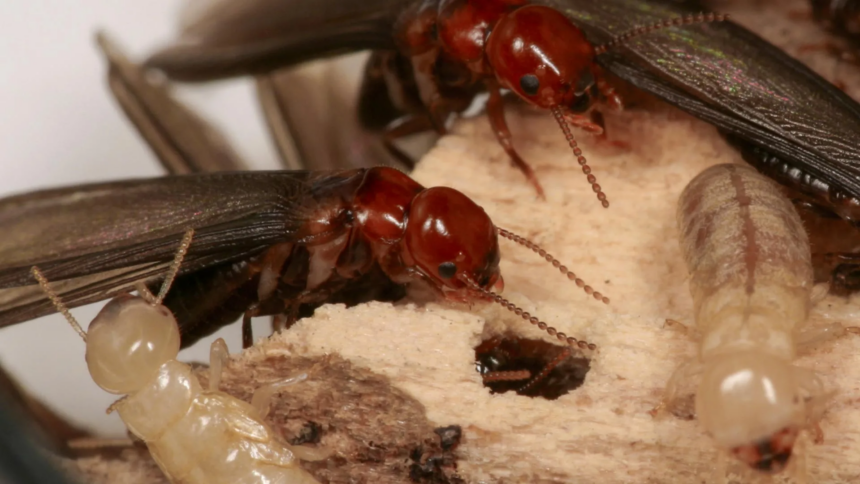
Western drywood termites are native to North America and play a real role in nature by helping break down dead wood above ground with help from microorganisms in their guts. "They are recyclers," Choe said. "And they’re very common."
That ecological role becomes a serious headache when the same insects move from dead trees into houses. They do not distinguish between natural wood and structural lumber, which is why they are a persistent concern in places such as California and Florida, as well as parts of Canada and Mexico. "It’s only a matter of time before termites attack a house, especially in warmer parts of the states," Choe said.
The limits of fumigation
One of the most widely used treatments for drywood termites is fumigation, in which a home is sealed under a tent and filled with gas to kill the insects. California relies on this approach more than any other U.S. state, according to UC Riverside.
But fumigation has drawbacks. The industry has been under pressure to find alternatives because sulfuryl fluoride, the chemical used in fumigation, is toxic to humans and also acts as a greenhouse gas. It is also costly, and it does not stop a home from becoming reinfested later.
"Even though it is very thorough, a home can be infested again soon after fumigation is completed," Choe said. "Some people fumigate every three to five years because it doesn’t protect structures from future infestations."
How pinene helps insecticide work better
Another option is localized injection. In this method, pest control workers drill into infested wood, reach the termite "gallery" or hiding area, and inject insecticide directly inside. Because it targets a smaller area, localized treatment can use fewer chemicals and cost less than fumigation. It may also leave treated wood better protected against future infestations.
"This is a more localized treatment, and in theory, it is a better strategy when you want to control drywood termites with fewer chemicals. It’s less expensive, and the treated wood may also stay protected from future infestations," Choe said.
The big challenge is finding where the termites actually are inside the wood. These insects can spread through complex tunnel systems, and standard contact insecticides only work if the termites physically touch the treated area. That is where pinene changed the equation. The scent appears to draw termites from a distance, reducing the need to pinpoint every hidden pocket before treatment.
"Even at low concentrations, pinene is good at attracting termites from a distance," Choe said.
"We don’t think it’s functioning as a pheromone," Choe said. "We think the scent is more associated with their food. Smells nice… dinner time! That’s the concept that we had in mind."
The insecticide used in the study
The insecticide used in the 2024 study was fipronil, which is also used against ants. Fipronil can harm aquatic insects and pollinators if it escapes into the environment, but in this case it was injected into wood, which lowers the chance of off-target effects.
Choe’s lab focuses on how urban insect pests communicate chemically, with the goal of turning that knowledge into smarter control strategies for pests such as western drywood termites.
"Our study shows that if you understand insect behavior better, it’s interesting by itself," Choe said. "Then there are also important implications for more effective pest management, so we can use fewer chemicals without compromising efficiency."
Story Source:
Materials provided by University of California – Riverside. Note: Content may be edited for style and length.
Journal Reference:
Cite This Page:
What Did Prehistoric Europeans Eat? Scientists Uncover Surprising Answers
Scientists Say This Overlooked Organ Could Hold the Key to Longer Life
Scientists Reveal Eating Fruits and Vegetables May Increase Your Risk of Lung Cancer
Scientists Reverse Brain Aging With Simple Nasal Spray
Stay informed with ScienceDaily’s free email newsletter, updated daily and weekly. Or view our many newsfeeds in your RSS reader:
Keep up to date with the latest news from ScienceDaily via social networks:
Tell us what you think of ScienceDaily — we welcome both positive and negative comments. Have any problems using the site? Questions?
95% success rate: This new trick lures termites straight to their death – ScienceDaily



Leave a Comment

