


Now
65°
Sun
62°
Mon
61°
by Jennifer Singh
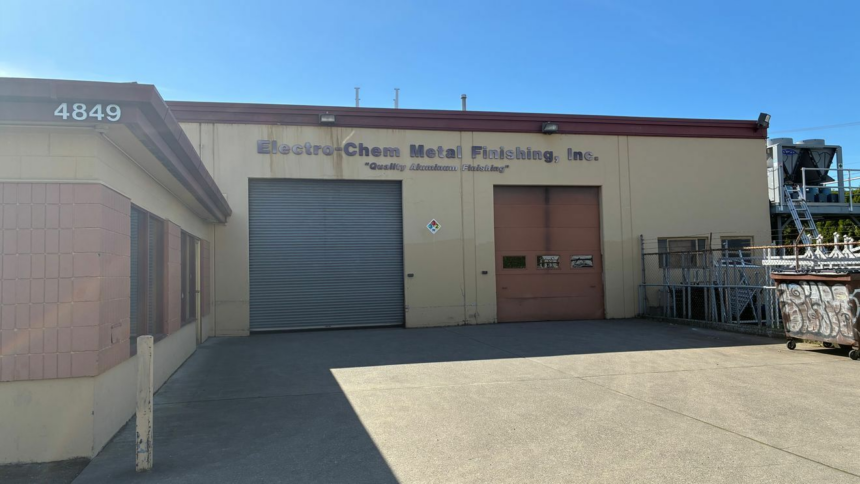
PORTLAND, Ore. (KATU) — A Southeast Portland metal finishing company has agreed to stop using a chemical solvent after the Oregon Department of Environmental Quality (DEQ) determined its emissions exceeded Cleaner Air Oregon health risk levels and posed a potential health risk to nearby neighborhoods.
Electro-Chem Metal Finishing, an aluminum coating company located near Portland’s Brooklyn, Creston-Kenilworth and Reed neighborhoods, has used trichloroethylene, or TCE, in a vapor degreasing process to clean metal parts.
DEQ air quality modeling found the company’s TCE emissions were many times higher than Oregon’s health-based risk levels.
SEE ALSO | Gov. Kotek says gas tax referendum is a 'tough sell' nearly a month before May vote
The department said the issue came to its attention while it was evaluating air quality permit requirements under the Cleaner Air Oregon program.
Agency staff inspected the site to determine how TCE was being released into the air, and the company provided data about its use of the chemical.
DEQ said Electro-Chem emitted TCE intermittently, not continuously, and records show the company used TCE about once per week.
Based on that information, DEQ performed an immediate risk assessment that included air quality modeling.
DEQ said the results showed TCE emissions far above Cleaner Air Oregon health-based risk levels for short-term exposure and exceeded the threshold at which the agency can require immediate curtailment of operations to protect public health.
Air quality modeling showed the area of potential elevated exposure extended up to roughly a half mile from the facility, with the highest potential exposure closest to it, DEQ said.
In a statement, DEQ said that when it alerted the company on Thursday, Electro-Chem agreed to immediately stop using the solvent.
“This is exactly the kind of situation Cleaner Air Oregon was created to address,” said Christine Svetkovich, DEQ northwest region administrator. “When we determine air toxics levels may pose a health risk, we act quickly. In this case, the company agreed to immediately stop using TCE, which removes exposure while we continue working to ensure compliance with Cleaner Air Oregon health standards.”
The U.S. Environmental Protection Agency (EPA) finalized a rule to prohibit most uses of TCE in 2024, but the implementation timeline has been delayed due to legal challenges and federal administrative actions.
In a statement released to DEQ on Thursday, the company said, in part, “As of Friday, April 17th, 2026, we will transfer all remaining TCE to waste drums in preparation for transport to the appropriate hazardous waste facility. The TCE waste will be removed within the next 30 days. Any future solvents used in our vapor degreaser will be verified to meet Clean Air Oregon standards.”
The Oregon Health Authority said the long-term health risk to the general public from past levels of TCE estimated in the air around Electro-Chem is low.
OHA said the greatest concern is potential effects to the developing heart in babies exposed during the first trimester of pregnancy, and potential miscarriage.
Pregnant women who are concerned they may have been exposed to TCE are encouraged to contact their health care provider. People who do not have a health care provider are encouraged to contact a county public health clinic or federally qualified health center in their community. Multnomah County residents can call 311 to access health services.
OHA said TCE does not last longer than a few hours in the body and does not recommend medical testing for someone who believes they may have inhaled TCE in the air.
“The most important public health action is to stop the exposure, and DEQ’s agreement with Electro-Chem has accomplished that,” said Gabriela Goldfarb, manager of the Environmental Public Health Section in OHA’s Public Health Division.
“For anyone who is concerned about exposure during their pregnancy, currently or in the past year, OHA can provide information resources for you and your health care provider.”
OHA’s Environmental Health Assessment Program can be reached at EHAP.Info@odhsoha.oregon.gov or 971-673-0440. OHA said its public health toxicologists can provide information for people and their health care providers about TCE and can refer a health care provider to a physician-toxicologist for consultation.
DEQ and OHA said they will continue monitoring the company to ensure compliance with environmental regulations and public health standards and will work with the local community as needed to answer questions about potential health risks.
2026 Sinclair, Inc.
Portland metal finishing company to halt solvent use after emissions exceed health limits – KATU



Leave a Comment